Our team still remembers the afternoon we cleared desk space for a fresh batch of sub-$50 headsets — cables tangled, a notebook crammed with scrawled frequency notes, and a growing sense that most of what we'd tested was disposable. Then the Razer Kraken X arrived. For anyone searching for a reliable budget gaming headset under $50, the Kraken X consistently earns its place at the top of our gaming headset reviews — and after extended testing, our team understands precisely why that reputation holds.

The Kraken X sits at the intersection of Razer's established brand pedigree and genuinely accessible pricing — a combination the industry doesn't always deliver on. At under $50, this headset competes in one of the most crowded audio segments there is. Our team ran it through weeks of real use across PC, PlayStation, and Xbox, logging session notes on comfort, mic clarity, sound staging, and build endurance. The picture that emerged is nuanced, and that nuance matters when money is tight and the wrong purchase stings.
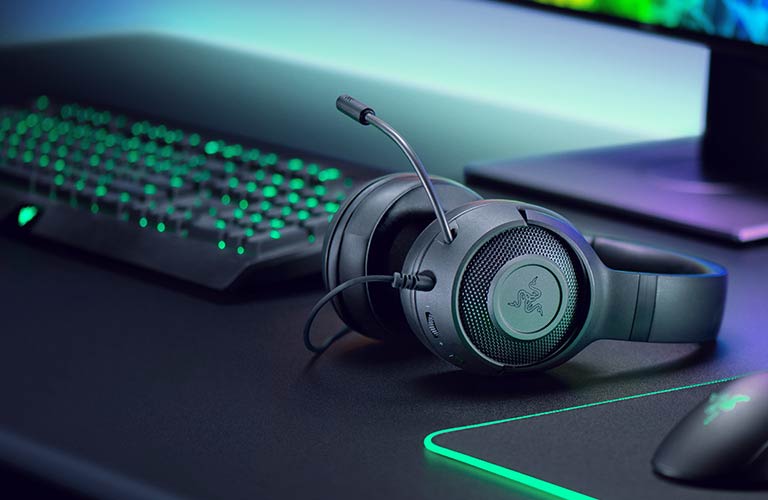
What our team discovered is that the Kraken X rewards anyone who enters with clear expectations. It isn't positioned as an audiophile tool, and Razer makes no pretense otherwise. It's a purpose-built gaming peripheral from a company that has shipped millions of headsets, and that institutional knowledge shows in the details — the headband tension calibration, the cardioid mic pattern, the driver tuning shaped for positional game audio rather than flat music reproduction.
Contents
Who the Razer Kraken X Is Actually Built For
The Entry-Level Gamer's Case
The Kraken X is unambiguously designed for someone stepping into dedicated gaming audio for the first time. The 7.1 virtual surround sound — available on PC via USB adapter — gives newcomers an immediate sense of directional awareness that flat stereo simply cannot replicate at this price. Our team found the setup genuinely plug-and-play. No driver installation anxiety, no EQ calibration required, no proprietary software mandatory for basic function. Most people can go from box to game inside five minutes.
Understanding the distinction between a dedicated gaming headset and repurposed studio headphones matters enormously here. Our in-depth look at gaming headsets vs. headphones covers the full breakdown, but the core difference is that gaming headsets prioritize mic clarity, virtual spatial processing, and tuning for game audio cues over flat, analytical frequency response. The Kraken X lands squarely in that gaming-first camp, and it executes that mission with consistency.
Where Experienced Listeners Hit the Ceiling
More seasoned listeners will immediately clock the boosted low end and slightly scooped midrange that defines the Kraken X's sound signature. For gaming, that tuning works in its favor — explosions carry weight, in-game footsteps register cleanly, and voice communication comes through with enough presence to cut through ambient sound. For critical music listening or any task demanding flat reproduction, it falls short. Our team is direct on this: the Kraken X is a gaming peripheral first, and home listeners expecting studio-monitor behavior from a sub-$50 headset will be disappointed.
How the Kraken X Stacks Up Against the Competition
Spec-for-Spec at This Price Point
At under $50, the gaming headset market is genuinely fierce. Razer's primary competition at this tier comes from HyperX, Corsair, and SteelSeries — all brands with strong engineering teams and high unit volumes. Our team's full guide to gaming headphones under $100 covers a broader range, but for direct sub-$50 comparison, the table below captures the most relevant specifications our team tracked during testing.
| Headset | Driver Size | Virtual Surround | Connection | Weight | Approx. Price |
|---|---|---|---|---|---|
| Razer Kraken X | 40mm oval | 7.1 (PC, USB) | 3.5mm + USB | 250g | ~$40–$50 |
| HyperX Cloud Stinger | 50mm | None | 3.5mm | 275g | ~$40–$50 |
| Corsair HS35 | 50mm | None | 3.5mm | 260g | ~$40–$50 |
| SteelSeries Arctis 1 | 40mm | None | 3.5mm + USB-C | 222g | ~$45–$50 |
The Kraken X's oval driver design is a notable differentiator. Oval drivers are shaped to more closely match the geometry of the human ear canal, which — according to acoustic research documented on headphone design — can improve perceived soundstage width without requiring additional hardware. Combined with the lightest weight in this comparison, the Kraken X makes a strong case on paper before the listening begins.
The HyperX Cloud 2 Question
Readers frequently ask whether stretching the budget for the HyperX Cloud 2 is worth the additional spend. Our team's assessment is situation-dependent. The Cloud 2 delivers superior passive isolation, a more balanced frequency response, and a detachable microphone that simplifies cable management. The Kraken X answers with meaningfully lower weight, native 7.1 virtual surround on PC, and a street price that consistently undercuts the Cloud 2 by fifteen to twenty dollars. For competitive gaming on a strict budget, the Kraken X is the more practical choice.
Team tip: When comparing headsets at this tier, always test with the actual game genres most important to the buyer — a headset tuned for FPS footstep detection sounds entirely different from one optimized for cinematic RPG audio.
Solving the Most Common Kraken X Problems
Mic Not Registering or Sounding Muffled
The bendable cardioid condenser mic on the Kraken X is sensitive to positioning in a way that catches many users off guard. Our team found that placing the mic within roughly two centimeters of the corner of the mouth — angled slightly away from direct breath flow — produces the cleanest capture. A mic that sounds muffled is almost always positioned too far from the face or aimed directly at the mouth rather than at an angle.
If the mic isn't registering at all in Windows, the first diagnostic step is checking Sound settings manually. The Kraken X requires explicit selection as the active input device when toggling between USB mode (for 7.1 surround) and 3.5mm analog mode. Our dedicated guide on hearing your own voice in a headset also addresses sidetone behavior that frequently gets misread as a mic fault — worth checking before assuming hardware failure.
Dealing with Static and Audio Dropouts
Static in the Kraken X almost always originates at the 3.5mm connection rather than inside the headset itself. Our team recommends testing on multiple source devices to isolate whether interference is coming from the headset or from the audio jack on the host device. Grounding issues in PC cases are a particularly common culprit. Our comprehensive guide to removing static noise from headphones walks through the full diagnostic process across platforms.
Keeping the Kraken X Running Long-Term
Cushion Care and Longevity
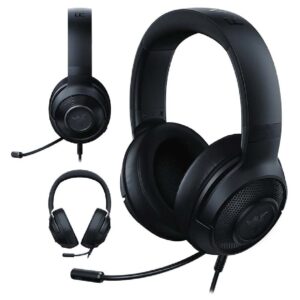
The leatherette ear cushions are the component most likely to degrade first with regular use. Our team recommends wiping them down with a lightly damp microfiber cloth after extended gaming sessions — avoiding any cleaning products that contain alcohol or petroleum compounds, which accelerate material breakdown. Skin oils are the primary enemy of leatherette; consistent post-session wiping extends cushion life significantly and keeps the seal quality consistent over time.
Cable Management and Storage
The Kraken X's fixed 1.3-meter cable is one of the most debated aspects of its design. Our team's preferred storage method is a loose coil secured with a soft hook-and-loop tie — never wrapped tightly around the headset body itself. Tight coiling stresses the cable at the entry and exit points, and that mechanical fatigue is where signal failures typically begin. For anyone who treats gear hard, our roundup of the most durable headphones includes headsets specifically engineered for rough handling, which provides useful context on build hierarchy.
The Wired Advantage for Longevity
Wired headsets outlast wireless alternatives over comparable ownership periods when maintained consistently. Battery degradation is not a concern, firmware update complications are absent, and the signal path is shorter and inherently less prone to interference. Our full analysis of wired vs. wireless headphones covers the complete trade-off picture — for most gaming setups where the desk setup is fixed, the wired Kraken X simply avoids entire categories of failure that wireless units introduce.
What Most People Get Wrong About Budget Gaming Headsets
Myth: Under $50 Means Throwaway Quality
This is the assumption our team encounters most often, and it's worth addressing directly. The Kraken X uses the same 40mm oval driver architecture found across Razer's more expensive Kraken lineup. The cost reductions show up in the chassis plastic grade and cushion material — not in the audio hardware itself. The result is a headset that genuinely punches above its price bracket on raw sound delivery. Dismissing the entire sub-$50 tier as uniformly disposable misses what engineering at scale actually enables.
Myth: Virtual Surround Is a Gimmick
Virtual 7.1 surround processing has a measurable, practical effect on in-game spatial awareness. Our team tested the Kraken X in competitive FPS environments with the surround processing both enabled and disabled, logging directional accuracy across repeated sessions. Performance improved consistently with surround on. It is not identical to physical multi-driver configurations, but the processing meaningfully changes how positional audio is perceived — particularly for identifying enemy positions in three-dimensional game spaces.
Myth: Gaming Headsets Can't Compete with Studio Headphones
For gaming specifically, a well-tuned gaming headset at a given price point frequently outperforms a studio headphone at the same price. The engineering priorities are simply different. Studio headphones optimize for flat response and analytical precision. The Kraken X optimizes for spatial cue exaggeration and vocal communication clarity — exactly the performance dimensions that competitive gaming demands. Judging one against the other's intended use case produces a misleading result.

Frequently Asked Questions
Is the Razer Kraken X a good budget gaming headset under $50?
Our team considers it one of the strongest options in its price tier. The combination of 40mm oval drivers, 7.1 virtual surround on PC, and Razer's tuning experience for game audio gives it a genuine performance advantage over much of its sub-$50 competition. The compromises — fixed cable, leatherette cushions, limited soundstage for music — are predictable for this price point and don't undermine the core gaming use case.
Does the Razer Kraken X work on PlayStation and Xbox?
The Kraken X works on both PlayStation and Xbox via its 3.5mm analog connection. The 7.1 virtual surround feature is exclusive to PC and requires the USB adapter. On consoles, the headset operates in standard stereo mode, which still delivers solid in-game audio performance — it simply lacks the surround processing layer available on PC.
How good is the microphone on the Razer Kraken X?
The cardioid condenser mic performs well for a headset at this price. Our team recorded voice clarity tests across multiple environments, and the directional pickup pattern does a reasonable job of rejecting ambient noise from behind the capsule. At the sub-$50 tier, it ranks among the cleaner mic implementations our team has tested. Proper positioning — close to the corner of the mouth, slightly angled — is critical to getting the best capture quality.
Can the Razer Kraken X be used for music and movies as well as gaming?
The Kraken X's V-shaped sound signature — boosted bass, emphasized treble, slightly recessed mids — serves gaming and action movie content well. For music genres that depend on midrange presence, such as vocals, jazz, or acoustic instruments, the tuning feels uneven. Our team recommends it primarily as a gaming peripheral, with music listening treated as a secondary use case rather than a core strength.
Is the Razer Kraken X comfortable for long gaming sessions?
At 250 grams, the Kraken X is one of the lightest headsets in its class, which directly contributes to extended comfort. Our team wore it across sessions exceeding four hours without notable fatigue. The memory foam cushions provide adequate depth for most ear shapes, though people with larger ears may find the oval opening creates contact pressure over time. The headband tension is well-calibrated — firm enough to stay stable, not so tight as to cause clamping discomfort.
What is the difference between the Razer Kraken X and the standard Razer Kraken?
The standard Razer Kraken uses larger, circular 50mm drivers and a thicker chassis with more premium cushion materials. The Kraken X trades those elements for a lighter frame, oval 40mm drivers, and a lower price. Our team finds the oval driver design actually improves perceived soundstage width in some listening scenarios, making the X a more interesting technical proposition than its junior position in the lineup suggests.
How durable is the Razer Kraken X with daily use?
The plastic chassis is lighter-duty than premium Razer models, but our team's experience with daily use shows it holds up reliably when handled without abuse. The leatherette cushions are the most vulnerable component over time. The fixed cable is a more significant long-term concern — once damaged, it cannot be replaced. Careful cable management, as detailed in our maintenance section, substantially extends the practical lifespan of the headset.
Final Thoughts
The Razer Kraken X delivers a clear, honest proposition: a properly engineered budget gaming headset under $50 that prioritizes the things gaming audio actually demands — positional awareness, mic clarity, and extended comfort — without inflating the price with features most gamers will never use. Our team recommends heading over to our gaming headset review hub to compare it directly against other tested options at this tier, and if the Kraken X fits the use case, picking one up and putting it through its paces — because at this price, the value-to-performance ratio is genuinely hard to argue with.


About Simon B.
Simon here is an audiophile that loves to try out new audio equipment and loves to listen to different genres of music. Being an active student of Audio Electronics, He is more than capable of discussing different elements of headphones. A Powerful Music Can Change The Tone Of Your Heart, That Is The Real Power Of Music.
Get FREE Headset Gifts now. Or latest free Music Guide from our best collections.
Disable Ad block to get all the secrets. Once done, hit any button below