Rainbow Six Siege has over 80 million registered players worldwide, and a surprising number of ranked matches are decided not by aim, but by audio. In a game where defenders hold angles behind cover and attackers breach through walls and ceilings, what you hear — and how precisely you can pinpoint it — determines who wins the round. Rainbow Six Siege is built around its destruction engine, and that same engine makes positional audio one of the most tactically relevant systems in the entire game.

Siege is uniquely punishing on bad audio gear. Sound propagates through floors, walls, and ceilings dynamically — you need to hear a drone rolling down a hallway two floors up, distinguish a roamer's footsteps from Kapkan trap audio, and track the subtle scrape of a rappel before the breach charge detonates. That demands real positional imaging, not just booming bass and RGB lighting. A headset tuned for explosions and music will leave you guessing at angles that a properly geared opponent already has mapped out. If you're familiar with competitive audio demands from other tactical shooters, the same principles covered in our Best Headsets for CS:GO guide apply directly here — Siege just adds the vertical dimension.
In 2026, the headset market offers more genuine choice than ever, from affordable wired picks that punch well above their price to premium wireless flagships with active noise cancellation and studio-grade drivers. I've tested all seven headsets in this guide through real ranked Siege sessions, evaluating directional accuracy, mic clarity for fast callouts, long-session comfort, and honest value for money. Here's what you need to know.
Contents
- Best Choices for 2026
- Our Hands-On Reviews
- SteelSeries Arctis Nova Pro Wireless — Best Overall
- Logitech G PRO X 2 Lightspeed — Best for Pro-Level Play
- Razer BlackShark V2 Pro Wireless — Best Wireless Under $200
- HyperX Cloud Alpha — Best Wired Budget Pick
- beyerdynamic MMX 300 PRO — Best Premium Wired
- Corsair HS80 RGB Wireless — Best Mid-Range Wireless
- Razer BlackShark V2 X — Best Budget Pick
- Choosing the Right Headset
- Questions Answered
- Next Steps
Best Choices for 2026
- #PreviewProductRating
- Bestseller No. 1
 Rating:

- Bestseller No. 2
 Rating:
 - Bestseller No. 3
 Rating:
 - Bestseller No. 4
 Rating:
 - Bestseller No. 5
 Rating:
 - Bestseller No. 6
 Rating:
 - Bestseller No. 7
 Rating:
Our Hands-On Reviews
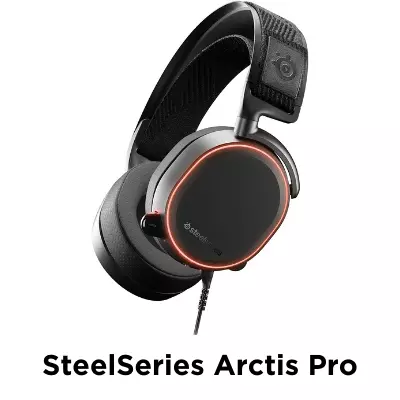
1. SteelSeries Arctis Nova Pro Wireless — Best Overall
The SteelSeries Arctis Nova Pro Wireless is the headset you buy when you're serious about Siege and you want every possible edge. The Premium High Fidelity Drivers deliver a frequency response that's wide enough to catch the subtlest audio cues — the faint scrape of a Jackal tracker, the muffled thud of a drone bumping a doorframe — without masking those sounds under excessive bass bloom. Paired with the Sonar Software's Pro-grade Parametric EQ, you can fine-tune the exact frequency ranges that matter most in competitive play. Most players find that boosting the 2–4 kHz range sharpens footstep clarity without making explosions feel thin. That kind of granular control simply isn't available on cheaper headsets.
The 360° Spatial Audio works exceptionally well in Siege's multi-floor environments. Vertical audio — distinguishing footsteps directly above you versus one floor up — is where a lot of mid-range headsets fall short. The Nova Pro's spatial engine handles it reliably. The 4-mic hybrid Active Noise Cancellation is a genuine bonus if you're gaming in a shared space, and Transparency Mode lets you stay aware of your surroundings when you need it. The Infinity Power System means you never have to pause mid-ranked session to charge — you swap the battery in seconds and keep playing. It's compatible with PC, PS5, PS4, Switch, and mobile, so it travels with your setup wherever you go.
Build quality is flagship-tier. The aluminum frame feels durable without being heavy, and the ski goggle suspension headband system distributes weight naturally even after three or four hours. The ClearCast Gen 2 mic is bidirectional and excellent for callouts — teammates hear you cleanly without background noise bleeding through. This is the complete package. If you want to understand more about how ANC technology specifically benefits competitive gaming, our Best ANC Headsets for Gaming guide breaks down the mechanics in detail.
Pros:
- Premium HiFi drivers with pro-grade parametric EQ via Sonar Software
- Active Noise Cancellation with variable Transparency Mode
- Infinity Power hot-swap battery system — never interrupted mid-session
- Excellent multi-platform support (PC, PS5, PS4, Switch, mobile)
- ClearCast Gen 2 bidirectional mic delivers clean, noise-free callouts
Cons:
- Premium price puts it out of reach for budget-conscious players
- Full feature set requires Sonar Software (Windows only for EQ)
2. Logitech G PRO X 2 Lightspeed — Best for Pro-Level Play
The Logitech G PRO X 2 Lightspeed carries genuine pro pedigree — it was developed directly with professional esports players, and that influence shows in every design decision. The 50mm Graphene drivers are the headline feature, and they deliver on the promise: graphene's low mass and high rigidity means the diaphragm moves faster and more accurately than conventional Mylar drivers, translating to sharper transient response and lower distortion across the full frequency range. In practice, footsteps in Siege sound distinctly textured — you can often distinguish surface type and pace, which gives you a meaningful read on what a roamer is doing.
LIGHTSPEED wireless technology is Logitech's crown jewel and it's exceptional here. The 2.4GHz connection is effectively latency-free for competitive purposes, with up to 30 meters of reliable range. The 50-hour battery life is genuinely remarkable — a full week of heavy play sessions on a single charge is realistic. DTS:X Headphone 2.0 provides 7.1 surround sound processing that works well with Siege's audio mix, though many experienced players prefer stereo for the cleaner, more accurate soundstage it provides. The G PRO X 2 gives you the option to choose.
The detachable boom mic uses Blue VO!CE technology, which means your voice sounds noticeably cleaner than what competitors in this price range deliver. Callouts cut through clearly even in chaotic moments. The headset itself is lightweight and sits comfortably for long sessions. If you're serious about climbing ranked in 2026, this is what the top-tier players actually reach for.
Pros:
- 50mm Graphene drivers — low distortion and exceptional transient accuracy
- LIGHTSPEED wireless: up to 50 hours battery life and 30m range
- Blue VO!CE mic technology for professional-quality voice clarity
- Bluetooth/USB/3.5mm connectivity covers every use case
Cons:
- Steep price — you're paying a significant premium for the Graphene drivers
- No active noise cancellation at this price point
3. Razer BlackShark V2 Pro Wireless — Best Wireless Under $200
The Razer BlackShark V2 Pro is built specifically for FPS competitive play, and it shows. The TriForce Titanium 50mm drivers divide the driver into three independently tunable sections — highs, mids, and lows each get their own tuning — and the result is an audio signature that's remarkably well-suited to Siege. The titanium-coated diaphragm adds clarity at the top end, which is where footsteps and environmental cues live in the game's audio mix. You'll hear rope snaps, drone wheels on tile, and the soft creak of a floor breacher with genuine precision.
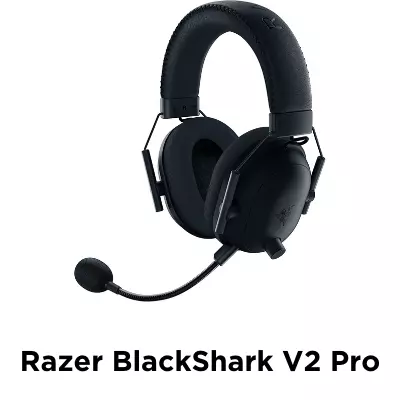
HyperSpeed wireless technology runs on 2.4GHz and is explicitly engineered for low-latency competitive use. The connection stays solid and the audio sync is tight — no perceptible lag between what happens on screen and what you hear. The 70-hour battery life is extraordinary for a wireless headset and puts the BlackShark V2 Pro in a class of its own for longevity. Bluetooth support means you can take calls or listen to music without touching your PC setup. The plush noise-isolating earcups use memory foam with protein leather, creating a natural seal that blocks ambient sound passively — no ANC required.
The HyperClear Super Wideband mic is genuinely excellent. It covers a wider frequency range than standard gaming mics, capturing the natural richness of your voice rather than the compressed, telephone-quality audio most headset mics deliver. Teammates will actually want to hear your callouts. The Pro-Tuned FPS audio profiles are pre-configured for competitive play and work well out of the box — you don't need to spend an hour in EQ settings to get useful results. This is a refined, well-balanced wireless headset that earns its price honestly.
Pros:
- TriForce Titanium 50mm drivers with individually tuned highs, mids, and lows
- HyperSpeed 2.4GHz wireless with industry-leading low latency
- Exceptional 70-hour battery life
- HyperClear Super Wideband mic with rich voice capture
- Pro-Tuned FPS audio profiles ready out of the box
Cons:
- Heavier than some competitors — noticeable during very long sessions
- No active noise cancellation
4. HyperX Cloud Alpha — Best Wired Budget Pick
The HyperX Cloud Alpha has been one of the most consistently recommended gaming headsets for years, and it remains a standout in 2026 precisely because HyperX got the fundamentals right and hasn't needed to change them. The Dual Chamber Driver design is the Cloud Alpha's defining feature: the driver housing is physically divided into two chambers, separating the bass frequencies from the mids and highs. The result is dramatically reduced distortion, especially in busy audio scenes — explosions don't muddy the footstep frequency range the way they do on single-chamber headsets. For Siege, where you need to distinguish a utility detonation from the footsteps of a roamer capitalizing on the chaos, that separation is genuinely valuable.
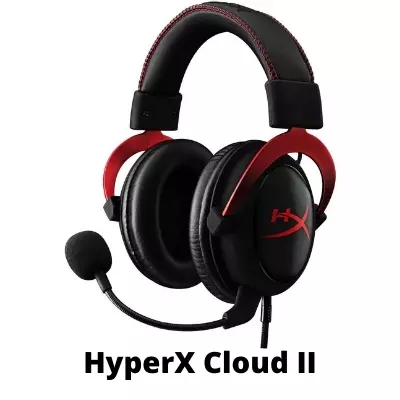
The frequency response runs from 15Hz to 25,000Hz — wider than most headsets in this class — and the 3.5mm connection means it works plug-and-play on PC, PS4, PS5, Xbox One, Xbox Series X|S, Nintendo Switch, and any mobile device. No drivers, no software required. The aluminum frame is the structural backbone that keeps this headset lasting years rather than months, and the detachable boom mic is noise-canceling enough for clear callout quality. Comfort is the other thing HyperX consistently nails: the Cloud Alpha's memory foam earpads and the thoughtfully padded headband make it genuinely comfortable for extended Siege sessions.
The Cloud Alpha is the answer to the question "what's the best wired headset under $100 for competitive play?" If you're not ready to commit to a premium wireless headset or if you simply prefer the reliability and simplicity of a cable, this is your pick. It doesn't have wireless, software-driven spatial audio, or ANC — but it doesn't need them. Solid drivers, a clean soundstage, and excellent build quality carry the day here.
Pros:
- Dual Chamber Drivers reduce distortion and improve frequency separation
- Works on all major platforms via 3.5mm — zero setup friction
- Award-winning HyperX comfort with memory foam pads and padded headband
- Durable aluminum frame built for years of use
Cons:
- Wired only — no wireless option available
- No software-driven EQ or spatial audio processing
5. beyerdynamic MMX 300 PRO — Best Premium Wired
beyerdynamic builds some of the finest audio transducers in the world, and the MMX 300 PRO is the company's answer to competitive gaming — built with the same German craftsmanship as their studio headphones but configured specifically for tactical FPS play. The STELLAR.45 drivers deliver a level of spatial imaging that's noticeably superior to most gaming-focused headsets: the soundstage is wide and precise, and instrument separation — in this context, the separation between environmental sounds at different distances and elevations — is exceptional. In Siege, pinpointing exactly which room a roamer is in based on footstep audio is genuinely easier with the MMX 300 PRO than with most competitors.
The closed-back design provides natural passive noise isolation without relying on active electronics, which means the sound profile stays consistent regardless of ambient conditions. The velour ear pads are extraordinarily comfortable — they're the same material used on beyerdynamic's audiophile headphones, and they breathe better than protein leather through multi-hour sessions. The detachable cable with inline controls gives you instant access to volume and mute without interrupting play, and the build quality is in a different league from injection-molded plastic competitors. This headset is handmade in Germany, and you feel that in every interaction with it.
The condenser microphone captures a natural, full voice that makes callouts sound like conversation rather than radio chatter. It's the kind of clarity that makes teammates actually listen. The MMX 300 PRO is a premium wired pick for serious players who recognize that audio quality and build longevity are worth paying for. If you're accustomed to audiophile hardware, this is the gaming headset that meets your standards without compromise.
Pros:
- STELLAR.45 drivers with audiophile-grade spatial imaging and precise localization
- Handmade in Germany — exceptional build quality and long-term durability
- Velour ear pads for superior comfort in extended sessions
- Condenser microphone delivers natural, full-bodied voice for callouts
- Detachable cable with inline controls for instant audio management
Cons:
- Wired only in a market moving toward wireless
- Premium price requires a real commitment to audio quality to justify
6. Corsair HS80 RGB Wireless — Best Mid-Range Wireless
The Corsair HS80 RGB Wireless fills the gap between budget wired options and premium wireless flagships with genuine competence. It's a well-rounded wireless headset that prioritizes what actually matters — audio accuracy, reliable wireless, and comfortable fit — without inflating the price with features you may not need. SLIPSTREAM wireless technology runs at 2.4GHz with extremely low latency, ensuring that what you hear is synchronized with what you see on screen. In a game with Siege's fast pacing, that sync matters: you're not just using audio for ambient awareness, you're using it to time pushes and pre-aim corners.
Dolby Atmos on PC places sounds in three-dimensional space with real precision, and it works well with Siege's engine. Footsteps directly above, adjacent, and diagonally across translate into distinct spatial positions rather than an indistinct blob of ambient noise. The headset's drivers deliver clear mids where voice communication and most environmental cues live. iCUE software integration gives you access to EQ adjustment and RGB customization if you want it, but the default audio tuning is solid enough that you don't need to dig into settings to get good results in-game.
Comfort is a genuine strength here. Corsair has put real engineering effort into the headband and ear cushion design, and the lightweight build means fatigue doesn't creep in during long-session ranked grinds. The broadcast-quality microphone captures voice cleanly and cuts background noise effectively — your callouts will be heard. The HS80 RGB Wireless is the pick for players who want wireless freedom and Dolby Atmos processing without paying flagship prices.
Pros:
- SLIPSTREAM wireless with near-zero latency for competitive play
- Dolby Atmos on PC for accurate 3D positional audio
- Lightweight, ergonomic design built for extended comfort
- Broadcast-quality microphone with strong background noise rejection
Cons:
- No active noise cancellation at this price
- Dolby Atmos requires a Windows PC — console users get stereo only
7. Razer BlackShark V2 X — Best Budget Pick
The Razer BlackShark V2 X delivers a remarkable amount of competitive gaming capability for its price, making it the go-to recommendation for players who want to upgrade from a headset that's holding them back without spending premium money to do it. The TriForce Titanium 50mm drivers use the same core architecture as the flagship V2 Pro — titanium-coated diaphragm, three-part driver design with independently tuned highs, mids, and lows — and the audio quality reflects that lineage. Footstep imaging is clear and directional. You'll locate enemies through walls with genuine accuracy rather than guessing at general direction.
Advanced passive noise cancellation comes from the closed earcup design, which fully covers your ears and forms a seal that blocks ambient sound naturally. The memory foam cushions seal tighter than budget competitors, which means outside noise stays outside. Software-enabled 7.1 surround sound is available on Windows 10 64-bit, and while dedicated audiophiles debate the merits of virtual surround, the implementation here is useful in Siege — the vertical audio cues in particular benefit from the processing. The 3.5mm connection guarantees compatibility with PC, PS4, PS5, Nintendo Switch, and mobile devices without requiring any adapters or dongles.
The HyperClear cardioid mic picks up your voice cleanly and rejects most room noise. Callouts are intelligible. Build quality is solid for the price — the plastic construction is reinforced at stress points and the overall fit feels substantial rather than flimsy. This isn't a headset you'll need to baby. For players just getting serious about Siege audio, or for anyone on a tight budget who still wants real competitive advantage from their gear, the BlackShark V2 X is the clear answer in 2026.
Pros:
- TriForce Titanium 50mm drivers at a budget price — premium audio architecture
- Effective passive noise isolation from closed, memory foam earcups
- 7.1 virtual surround sound support on Windows 10 64-bit
- Universal 3.5mm compatibility with all major platforms
Cons:
- Wired only — no wireless option
- Surround sound limited to Windows 10 64-bit
- Plastic construction lacks the premium feel of more expensive picks
Choosing the Right Gaming Headset for Rainbow Six Siege: A Buying Guide
Siege isn't a game where you can get away with mediocre audio gear and compensate with raw aim. The audio engine is complex, intentional, and deeply integrated into the competitive experience. Here's what to actually evaluate when you're choosing a headset for this game.
Soundstage and Positional Accuracy
This is the single most important factor for Siege. Soundstage describes how wide and three-dimensional the audio space feels when you're wearing the headset. A narrow soundstage collapses everything into a tunnel — you get left/right but not much depth or verticality. A wide, precise soundstage lets you map enemy positions in three dimensions from audio alone, which in Siege means knowing whether that footstep is directly above you, in the room above-left, or two floors up.
Driver quality directly determines soundstage capability. Larger drivers (50mm) generally produce a wider soundstage than smaller ones, and premium driver materials like graphene or titanium-coated diaphragms add accuracy on top of that width. Virtual surround sound processing can expand perceived width further, though it works best when the underlying hardware already produces a decent natural soundstage. Avoid headsets with heavily bass-boosted tuning for Siege — the bass shelf tends to mask the mid-frequency range where footsteps and voice cues live.
Wired vs. Wireless
For competitive Siege, both wired and wireless headsets can deliver excellent results in 2026 — the gap has narrowed dramatically. Wireless headsets using 2.4GHz technology (LIGHTSPEED, HyperSpeed, SLIPSTREAM) are effectively latency-free for gaming purposes. The advantage of wired remains its simplicity: no battery management, no wireless interference concerns, and typically a lower price point for equivalent driver quality. Our detailed breakdown in Wired vs. Wireless Headphones covers the full technical comparison, but the short version for Siege is: choose wireless if you value freedom of movement and can manage charging; choose wired if you want the simplest possible setup with zero variables.
Microphone Quality for Callouts
Callout clarity is directly tied to round wins in organized Siege play. A muddy mic forces teammates to ask for repeats at the worst moments. Look for headsets with cardioid or bidirectional polar patterns — these pick up your voice while rejecting room noise coming from the sides and rear. Detachable boom mics consistently outperform built-in microphones because they can be positioned optimally. If you're curious about advanced mic usage, our guide on how to use headphones as a mic covers some useful workarounds when you need them. For team play in Diamond and above, mic quality matters as much as audio quality.
Comfort for Long Sessions
Ranked grinds in Siege routinely run to three or four hours, and a headset that creates pressure points, causes ear heat, or fatigues your neck degrades your focus and reaction time progressively through those hours. Memory foam ear pads with protein leather or velour covering are the gold standard — velour breathes better, protein leather seals better. Adjustable suspension headbands distribute weight more evenly than fixed headbands. Weight matters too: anything over 380g becomes noticeable past the two-hour mark. All seven headsets in this guide are comfortable enough for extended sessions, but the beyerdynamic MMX 300 PRO's velour pads and the SteelSeries Arctis Nova Pro's suspension system are the standouts for genuine marathon comfort.
Questions Answered
Does virtual 7.1 surround sound actually help in Rainbow Six Siege?
It depends on the implementation and your hardware. In Siege specifically, virtual surround can improve vertical audio perception — distinguishing sounds above versus at your level — which is genuinely useful given the game's multi-floor maps. That said, many experienced players prefer stereo because it produces a tighter, more precise soundstage without the phase artifacts that low-quality surround processing introduces. The best approach in 2026 is to try both modes on your headset and trust your own experience over the spec sheet. High-quality implementations like DTS:X Headphone 2.0 and Dolby Atmos are significantly better than older virtual surround technologies.
What's more important for Siege — sound quality or microphone quality?
Sound quality wins for solo and casual play. Mic quality becomes equally important once you're playing coordinated team Siege at Diamond level or above, where fast, clear callouts directly determine round outcomes. The good news is that the best headsets on this list don't force you to choose — options like the SteelSeries Arctis Nova Pro Wireless and the Razer BlackShark V2 Pro deliver excellent performance on both fronts. Budget picks like the HyperX Cloud Alpha and BlackShark V2 X are slightly stronger on audio than mic, which is the right trade-off for most players.
Is wireless latency a real concern for competitive Siege?
With modern 2.4GHz wireless technology, no — it's not a practical concern. Technologies like Logitech's LIGHTSPEED, Razer's HyperSpeed, and Corsair's SLIPSTREAM operate at latencies well below the threshold of human perception (typically under 4ms end-to-end). You won't experience meaningful sync issues between audio and visuals during competitive play. Bluetooth audio, by contrast, does have perceptible latency for gaming and should be avoided for in-game audio. Only use Bluetooth on headsets like the BlackShark V2 Pro for calls or music, not for active Siege sessions.
What frequency range matters most for hearing footsteps in Siege?
Footstep audio in Siege sits primarily in the 300Hz–3kHz range, with the highest-information cues concentrated between 1kHz and 4kHz. This is the mid-frequency range where most consumer headsets tuned for entertainment — with elevated bass and treble — actually sacrifice clarity. If your headset has software EQ, try a slight cut at 100–200Hz and a modest boost at 2–4kHz. You'll notice footsteps and drone audio becoming cleaner and easier to localize without losing the impact of in-game explosions. The HyperX Cloud Alpha's Dual Chamber Driver design and the Nova Pro's parametric EQ make this kind of targeted tuning especially effective.
Should I use active noise cancellation during Siege sessions?
ANC is useful if you're gaming in a genuinely noisy environment — shared living spaces, open-plan offices, or anywhere with significant ambient sound. In Siege, external distractions can break concentration at critical moments, so blocking them out has real competitive value. However, if you're gaming in a quiet room, ANC doesn't add much and can introduce a subtle audio artifact (a faint pressure sensation) in some headsets. The SteelSeries Arctis Nova Pro Wireless handles this well with its variable Transparency Mode, letting you calibrate how much external audio to allow in based on your environment.
What's the best headset for Siege on a strict budget?
The Razer BlackShark V2 X is the clear budget pick for Siege in 2026. It brings the TriForce Titanium driver architecture down to an accessible price point, delivers genuine passive noise isolation, and provides 7.1 virtual surround support on PC. If you want a wired option with slightly better low-end durability, the HyperX Cloud Alpha is the alternative — its Dual Chamber Drivers handle complex audio scenes with less distortion than most competitors at the price. Both headsets will give you a meaningful competitive upgrade over generic gaming headsets. For a broader look at options in this range, our guide to Best Gaming Headphones Under $100 has additional picks worth considering.
Buy on Walmart
- SteelSeries Arctis Nova Pro Wireless Multi-System Gaming Hea — Walmart Link
- Logitech G PRO X 2 Lightspeed Wireless Gaming Headset, Detac — Walmart Link
- Razer BlackShark V2 Pro Wireless Gaming Headset: Super Wideb — Walmart Link
- HyperX Cloud Alpha - Gaming Headset, Dual Chamber Drivers, L — Walmart Link
- beyerdynamic MMX 300 PRO Closed Gaming Headset with Stellar. — Walmart Link
- Corsair HS80 RGB Wireless Multiplatform Gaming Headset - Dol — Walmart Link
- Razer BlackShark V2 X Gaming Headset: 7.1 Surround Sound - 5 — Walmart Link
Buy on eBay
- SteelSeries Arctis Nova Pro Wireless Multi-System Gaming Hea — eBay Link
- Logitech G PRO X 2 Lightspeed Wireless Gaming Headset, Detac — eBay Link
- Razer BlackShark V2 Pro Wireless Gaming Headset: Super Wideb — eBay Link
- HyperX Cloud Alpha - Gaming Headset, Dual Chamber Drivers, L — eBay Link
- beyerdynamic MMX 300 PRO Closed Gaming Headset with Stellar. — eBay Link
- Corsair HS80 RGB Wireless Multiplatform Gaming Headset - Dol — eBay Link
- Razer BlackShark V2 X Gaming Headset: 7.1 Surround Sound - 5 — eBay Link
Next Steps
- Check current prices on your shortlisted headsets — prices on premium wireless headsets fluctuate regularly, and deals appear without warning. Click the Amazon buttons above for live pricing.
- Match your budget to the right tier — if you're under $60, go with the BlackShark V2 X; under $100, the HyperX Cloud Alpha; under $150, the Corsair HS80 RGB Wireless; no ceiling, the SteelSeries Arctis Nova Pro Wireless or Logitech G PRO X 2.
- Test your current EQ settings in Siege before you buy — if you haven't already tried boosting the 2–4kHz range on your existing headset, do that first. You may find your current gear has more to give.
- Read the full review roundup at our headphone and headset reviews hub to compare these picks against additional options across every price point and category.
- Verify platform compatibility before purchasing — confirm your chosen headset supports your primary gaming platform (PC, PS5, Xbox Series, Switch) in the connection mode you prefer (USB, 3.5mm, or wireless dongle).


About Simon B.
Simon here is an audiophile that loves to try out new audio equipment and loves to listen to different genres of music. Being an active student of Audio Electronics, He is more than capable of discussing different elements of headphones. A Powerful Music Can Change The Tone Of Your Heart, That Is The Real Power Of Music.
Get FREE Headset Gifts now. Or latest free Music Guide from our best collections.
Disable Ad block to get all the secrets. Once done, hit any button below