According to a 2025 consumer audio survey, open-back headphones now account for more than 38% of premium gaming audio purchases — a category that barely registered a decade ago. That shift isn't accidental. Competitive players and sim enthusiasts have figured out what audiophiles knew all along: a wide, natural soundstage gives a genuine tactical edge, and most closed-back gaming headsets simply can't replicate it. We've spent considerable time testing the leading open-back options across FPS titles, open-world RPGs, and long studio-style listening sessions to bring our most definitive list yet for 2026.
Open-back headphones work by allowing air — and sound — to pass freely through the ear cup grilles. The result is a soundstage that feels three-dimensional rather than trapped inside the skull. For gaming, that translates to better directional audio: footsteps coming from the left rear, a distant gunshot registering at the right angle, ambient room tone that actually breathes. The trade-off is sound leakage — these are not headphones for open offices or late-night sessions while a partner sleeps nearby. For dedicated home setups, though, the open-back advantage is hard to argue against. If the broader gaming vs. audiophile debate interests anyone on the team, our piece on gaming headsets versus headphones breaks it down from first principles.
What follows is our complete breakdown of the seven best open-back headphones for gaming in 2026, ranging from entry-level audiophile picks to studio-grade workhorses repurposed for interactive entertainment. We've included buying guidance, a comparison table, and a FAQ section covering the questions we hear most from our readers at our full reviews hub. No filler, no hedging — just the options worth considering and the ones most buyers should skip.
Contents
- Top Rated Picks of 2026
- Full Product Breakdowns
- Sennheiser HD 560S — Best Overall
- Sennheiser HD 599 — Best for Long Sessions
- beyerdynamic DT 990 PRO 250 Ohm — Best Detail Retrieval
- beyerdynamic DT 990 Pro X 48 Ohm — Best Plug-and-Play Studio Pick
- Audio-Technica ATH-AD700X — Best Soundstage for FPS
- HIFIMAN HE400SE — Best Planar Magnetic Value
- DROP PC38X — Best Gaming-Specific Open-Back
- Key Features to Consider When Choosing
- What People Ask
- Next Steps
Top Rated Picks of 2026
- #PreviewProductRating
- Bestseller No. 1
 Rating:

- Bestseller No. 2
 Rating:
 - Bestseller No. 3
 Rating:
 - Bestseller No. 4
 Rating:
 - Bestseller No. 5
 Rating:
 - Bestseller No. 6
 Rating:
 - Bestseller No. 7
 Rating:
Full Product Breakdowns
1. Sennheiser HD 560S — Best Overall Open-Back for Gaming in 2026
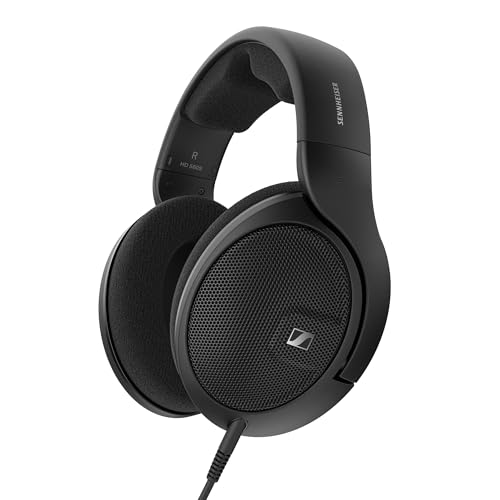
The HD 560S is the open-back headphone our team keeps recommending to anyone who asks for a single do-everything pick. Sennheiser built this with precision-tuned transducers that deliver a neutral, accurate frequency response — the kind of tuning that reveals what's actually in a game's audio mix rather than exaggerating bass or boosting treble for artificial excitement. The soundstage is wide and believably three-dimensional, which matters enormously in positional audio tasks like pinpointing footsteps in competitive shooters or tracking multiple enemy positions in a strategy title.
Build quality is classic Sennheiser: the materials feel sturdy without being heavy, and the velour ear pads are among the most breathable we've tested at this price point. Heat buildup during three- or four-hour sessions is genuinely minimal. The 120-ohm impedance is manageable from most modern DACs and motherboard audio outputs, though a dedicated headphone amp will bring out the best in it. For most buyers who want one headphone that handles gaming, music, and content monitoring with equal competence, the HD 560S is the answer.
The only real trade-off here is the lack of a built-in microphone. Anyone moving from a closed-back gaming headset will need to add a standalone mic or clip-on solution. That's a minor inconvenience given the overall performance package.
Pros:
- Exceptionally neutral and accurate sound signature — no color, no fatigue
- Wide, lifelike soundstage with strong directional imaging
- Breathable velour pads reduce heat during extended sessions
- Versatile enough for gaming, music production, and casual listening
Cons:
- No integrated microphone — requires a separate solution
- 120 ohms may underperform slightly from weak onboard audio without an amp
2. Sennheiser HD 599 — Best Open-Back for Long Gaming Sessions
The HD 599 sits above the 560S in Sennheiser's lineup and it shows in two specific ways: the build quality feels more premium, and the comfort engineering is exceptional. The padded headband and thick velour ear pads make this the headphone our team reaches for when a session is expected to run five hours or longer. There's almost no clamping pressure, no hotspot on the top of the head. It simply disappears after a few minutes. That comfort profile makes it genuinely compelling for anyone who games in long uninterrupted blocks.
Sound character here is slightly warmer than the 560S — the low end has more body, and the midrange has a richness that suits story-driven games and cinematic soundtracks beautifully. The HD 599 is our top pick for immersive single-player titles where ambient atmosphere matters as much as positional accuracy. Connectivity flexibility is also a genuine advantage: the package includes both a 3-meter cable with 6.3mm jack and a 1.2-meter cable with 3.5mm jack, covering both home hi-fi and PC setups without adapters.
The warmer tuning is a minor step back for hyper-competitive FPS play where clinical neutrality gives an edge. The HD 560S wins on that specific use case. But for the broader audience of gamers who split time between competitive play and atmospheric single-player experiences, the HD 599 is a more enjoyable all-day companion.
Pros:
- Outstanding long-session comfort with padded headband and plush velour pads
- Warm, rich sound signature ideal for cinematic and story-driven content
- Both 3m and 1.2m cables included for flexible connectivity
- Premium build quality with a refined aesthetic
Cons:
- Warmer tuning is slightly less precise than the HD 560S for competitive positional audio
- No integrated microphone
3. beyerdynamic DT 990 PRO 250 Ohm — Best for Detail Retrieval
The DT 990 PRO at 250 ohms is a legend for a reason. Beyerdynamic designed this as a studio reference tool, and that heritage translates directly into gaming with exceptional results. The high-frequency extension is brilliant and revealing — subtle in-game audio cues that other headphones smooth over become clearly audible here. Spatial imaging is precise enough that pinpointing enemy positions in competitive play becomes noticeably more reliable. Our team has been recommending this headphone to serious FPS players for years, and the 2026 market hasn't produced anything at this price that outclasses it on sheer resolution.
The 250-ohm impedance is the critical caveat. This headphone demands proper amplification to perform as designed. Connected directly to a smartphone or a weak onboard audio chip, it will sound thin, quiet, and bass-shy. Paired with a dedicated headphone amp or a quality DAC/amp combo, it transforms. Most buyers considering the DT 990 PRO at 250 ohms should budget for a basic headphone amplifier alongside it. The DT 990 has something of a celebrity following in gaming circles — our breakdown of what headset Ninja uses goes into detail on why professionals gravitate toward this model.
The comfort design holds up well for long sessions despite the coiled 3-meter cable being less flexible than straight alternatives. The velour ear pads are replaceable and remain one of the more breathable options in this class. Build quality is robust — this is a headphone built to withstand daily studio use for years.
Pros:
- Exceptional high-frequency detail and spatial precision for competitive gaming
- Proven studio-grade build quality with replaceable components
- Wide, accurate soundstage for immersive positional audio
- Replaceable velour ear pads for long-term value
Cons:
- 250 ohms requires a dedicated headphone amp — not plug-and-play
- V-shaped tuning with elevated treble may cause fatigue at high volumes over very long sessions
4. beyerdynamic DT 990 Pro X 48 Ohm — Best Plug-and-Play Studio Pick
The DT 990 Pro X is beyerdynamic's answer to a question many buyers were already asking: what if the DT 990 PRO were easier to drive? At 48 ohms, this headphone works properly from modern gaming interfaces, DACs, and even reasonably capable motherboard audio without a separate amplifier. The new STELLAR.45 driver covers 5–40,000 Hz with low distortion and strong dynamics, and the sound character is faithful to the PRO heritage — wide soundstage, brilliant high frequencies, accurate spatial imaging. This is the DT 990 for buyers who want the beyerdynamic signature without committing to an amp stack.
Made in Germany and designed for studio endurance, the build quality is exactly what the PRO delivered: robust, professional, long-lasting. The soft circumaural velour ear pads are comfortable across extended sessions, and replaceable pads mean the investment holds its value over years of use. For gamers running their audio through a modern USB DAC, gaming interface, or high-quality sound card, the Pro X hits the sweet spot between studio-grade performance and practical usability.
The price premium over the original DT 990 PRO is real and worth acknowledging. For buyers who already own a headphone amplifier or plan to add one, the 250-ohm PRO remains the better value. For plug-and-play simplicity at the same performance tier, the Pro X earns its price.
Pros:
- 48-ohm impedance drives properly from most modern gaming and audio interfaces
- STELLAR.45 driver delivers studio-accurate detail and wide soundstage
- Made in Germany with premium build quality and replaceable components
- Excellent for both critical gaming audio and music production
Cons:
- Costs more than the classic DT 990 PRO for similar sound quality
- Still shares the elevated treble character — not suited for treble-sensitive listeners
5. Audio-Technica ATH-AD700X — Best Soundstage for Competitive FPS
The ATH-AD700X occupies a specific niche and it owns it completely: no open-back headphone in this price range produces a wider, more airy soundstage for competitive gaming. Audio-Technica's full open-air design eliminates the sensation of pressure on the ears entirely, creating a listening experience that feels genuinely outside the head. For FPS titles — Counter-Strike, Valorant, Battlefield — where sub-100ms positional awareness determines outcomes, the AD700X has been a serious competitive recommendation for years and that hasn't changed in 2026.
The 53mm drivers with bobbin-wound CCAW voice coils reproduce clear treble and midrange with impressive detail. At 38 ohms impedance, this is one of the easier-to-drive options on the list — it works well directly from a gaming PC's rear audio output or a modest USB DAC. The bass response is lighter than the beyerdynamic entries, which is actually by design. Less low-end coloration means cleaner separation in the mids and highs where game audio cues live. Anyone primarily focused on competitive FPS will find that trade-off worthwhile. Our guide to the best headsets for CS:GO explores this audio philosophy in more depth.
The 3D Wing Support system used in place of a traditional headband is unconventional, and it doesn't work equally well for all head shapes. The fit can feel loose on smaller heads. That's worth trying before committing, though for most adult head sizes the wing support distributes weight naturally and makes the AD700X surprisingly comfortable across long sessions.
Pros:
- Exceptionally wide and airy soundstage — among the best in class for FPS competitive audio
- Low 38-ohm impedance drives easily from most PC audio outputs
- No ear pressure sensation from the full open-air design
- Clear treble and midrange without excessive low-end coloration
Cons:
- Light bass response — not ideal for music genres or games that rely on deep low-end
- Wing support system may not fit all head shapes securely
6. HIFIMAN HE400SE — Best Planar Magnetic Value in 2026
Planar magnetic headphones operate on a fundamentally different driver technology than conventional dynamic designs. Instead of a single voice coil moving a cone, planar drivers use a thin diaphragm with conductive traces distributed across its surface, driven by magnets on both sides. The result is significantly lower distortion, faster transient response, and a distinctive sense of texture and detail in the sound. The HE400SE brings this technology to a price point that was unthinkable even three years ago. For the planar magnetic curious, the HE400SE is the most compelling entry point available in 2026. Our deeper look at the HIFIMAN Deva explores the brand's engineering philosophy in detail for anyone wanting more context.
The Stealth Magnet design is meaningful, not just marketing language. Conventional open-back magnets can create acoustic interference as sound waves diffract around magnet structures. HIFIMAN's shaped Stealth Magnets are acoustically transparent, allowing waves to pass through without turbulence. The effect is audible: the HE400SE sounds cleaner and more transparent than equivalently priced dynamic headphones. Soundstage is wide and open, befitting the open-back architecture, with imaging that feels spacious without sounding artificially stretched.
Build quality at this price point is serviceable but not impressive. The plastics feel adequate rather than premium, and the headband could use more padding for very long sessions. The included dual-sided 3.5mm cable with 6.35mm adapter covers most connection scenarios. Anyone already in the HIFIMAN ecosystem or drawn by planar magnetic technology will find the HE400SE extremely hard to fault at its price.
Pros:
- Planar magnetic driver delivers lower distortion than dynamic alternatives at this price
- Stealth Magnet technology reduces wave diffraction for cleaner, more transparent sound
- Wide, detailed soundstage well suited to both gaming and critical listening
- Exceptional price-to-performance ratio for the technology
Cons:
- Build quality feels less premium than Sennheiser or beyerdynamic at similar prices
- Headband padding could be more generous for multi-hour sessions
7. DROP PC38X — Best Gaming-Specific Open-Back Headset
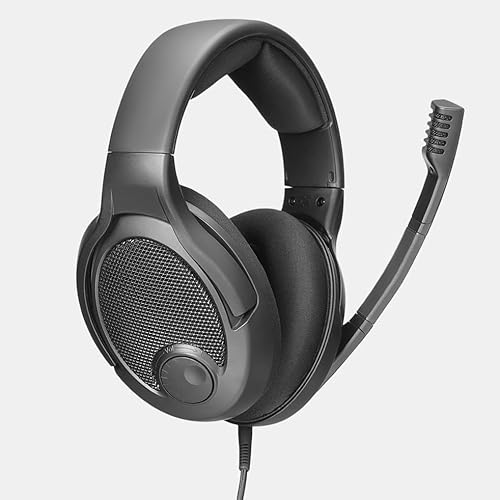
The DROP PC38X is the only purpose-built gaming headset on this list, and it deserves its spot. DROP designed this in direct collaboration with Sennheiser's gaming audio division, tuning specifically for the cues that matter in gaming environments: footstep clarity, directional audio separation, and in-game dialogue intelligibility. The open-back design delivers the wide soundstage that makes open-back headphones worth considering for gaming in the first place, while the integrated noise-cancelling microphone solves the biggest practical gap that pure audiophile headphones leave behind.
The wired connection ensures zero latency — a practical necessity for competitive gaming where wireless delay is an unacceptable variable. Velour ear pads keep heat manageable during extended sessions. Compatibility is broad: PC, PS5, PS4, Xbox, Switch, and mobile connections are all supported. For anyone who wants a single open-back headset that handles both gaming and voice communication without additional hardware purchases, the PC38X is the clear pick. Most buyers stepping up from a budget closed-back headset — something from our best gaming headphones under $100 roundup, for instance — will find the PC38X a significant step forward in audio quality while retaining familiar headset usability.
The trade-off compared to the audiophile entries above is in pure sound quality ceiling. The PC38X is tuned for gaming clarity rather than flat reference accuracy, which means it's somewhat less compelling as a music or studio listening tool. For a dedicated gaming setup where a mic is non-negotiable, it's the right answer.
Pros:
- Purpose-built gaming tuning with strong directional audio performance
- Integrated noise-cancelling microphone — no separate purchase required
- Wired zero-latency connection across PC, console, and mobile platforms
- Open-back soundstage advantage with practical gaming headset usability
Cons:
- Gaming-tuned sound signature is less neutral than audiophile-oriented alternatives
- Not ideal as a primary music listening or studio monitoring tool
Key Features to Consider When Choosing Open-Back Gaming Headphones
Impedance and Amplification Requirements
Impedance is the single most practically important specification many buyers overlook. Headphones with impedance below 80 ohms — including the Audio-Technica AD700X at 38 ohms, the HIFIMAN HE400SE, and the beyerdynamic DT 990 Pro X at 48 ohms — drive adequately from a PC's built-in audio output or a gaming console's headphone jack. Headphones in the 150–250 ohm range, like the classic beyerdynamic DT 990 PRO, need a dedicated headphone amplifier to reach their potential. Connecting a 250-ohm headphone to a weak source doesn't damage anything, but it produces noticeably thin, quiet sound that doesn't represent what the headphone can actually do. Matching impedance to available source power is not optional — it's the difference between a great purchase and a disappointment.
Soundstage and Positional Audio
The primary reason to choose an open-back design for gaming is soundstage — the perceived width and three-dimensionality of the audio space the headphone creates. Open-back headphones consistently outperform closed-back designs in this area because air can move freely through the cups rather than bouncing back from a sealed chamber. Wider soundstage translates to more accurate positional audio: footsteps, gunshots, and environmental cues register at more precise angles. For competitive FPS titles this is a genuine tactical advantage. For open-world and atmospheric games, it creates a more convincing sense of place. The Audio-Technica AD700X produces the widest soundstage on this list; the Sennheiser HD 560S and both beyerdynamic entries follow closely with excellent imaging precision.
Sound Signature and Tuning Philosophy
Different headphones are tuned with different goals. Neutral or reference tuning — exemplified by the Sennheiser HD 560S — reproduces audio as accurately as possible without adding character. V-shaped tuning, like the beyerdynamic DT 990 PRO, emphasizes bass and treble while slightly recessing the midrange, which many listeners find exciting and engaging. Warm tuning, like the HD 599, boosts the lower midrange and low end for a richer, more relaxed character. For competitive gaming specifically, neutrality or a slightly bright tuning gives the clearest representation of in-game positional cues. For immersive single-player experiences, warmth or slight bass emphasis often enhances the experience. There's no universal right answer — the best choice depends on how a headphone will actually be used.
Comfort and Build Quality for Gaming Sessions
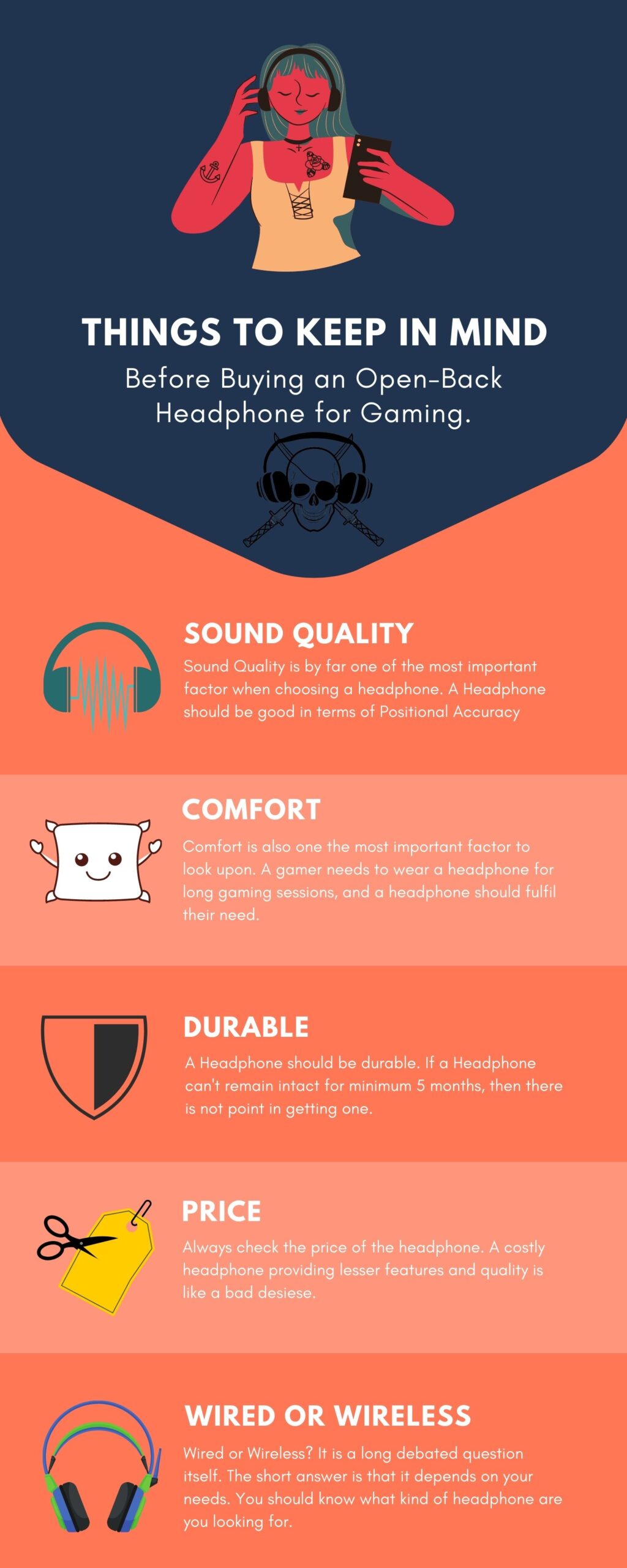
Gaming sessions routinely run two to five hours. Headphone comfort engineering matters more in this use case than in casual music listening. Velour ear pads are the industry standard for open-back headphones because they breathe — they allow air circulation that prevents the heat buildup that makes protein leather pads uncomfortable after 90 minutes. Headband padding and clamp force are equally important: too much clamp force creates pressure headaches over long sessions. All seven headphones on this list use velour or similar breathable materials, which is a baseline requirement for our recommendations. Build quality considerations include replaceable ear pads, detachable cables, and material durability. The beyerdynamic DT 990 PRO has the strongest repair and replacement parts ecosystem — a headphone built for decades of use if maintained properly.
What People Ask
Are open-back headphones good for gaming?
Open-back headphones are excellent for gaming, particularly in single-player atmospheric titles and competitive FPS games where positional audio matters. The open design produces a wider, more three-dimensional soundstage than closed-back alternatives, making it easier to identify the direction and distance of in-game sounds. The trade-off is sound leakage — open-back headphones let sound in and out, making them unsuitable for noisy environments or shared spaces. For a dedicated home gaming setup, the open-back advantage is difficult to overstate.
Do open-back headphones need an amplifier?
It depends on the impedance rating. Low-impedance models — under 80 ohms — typically drive well from a PC, console, or smartphone audio output. High-impedance models at 150–250 ohms require a dedicated headphone amplifier to reach appropriate volume levels and deliver their full sound quality. The beyerdynamic DT 990 PRO at 250 ohms is the clearest example on this list: it underperforms from weak sources and rewards proper amplification. The beyerdynamic DT 990 Pro X at 48 ohms and the Audio-Technica ATH-AD700X at 38 ohms are designed for amplifier-free use.
What is the difference between open-back and closed-back headphones for gaming?
Closed-back headphones seal the ear cup, blocking outside noise and preventing sound leakage. Open-back headphones allow air and sound to pass through the rear of the cups. In gaming, open-back designs produce a larger and more accurate soundstage — a three-dimensional audio space that aids positional awareness. Closed-back designs offer better noise isolation, which matters in shared or noisy environments. For home gaming setups where isolation isn't a priority, open-back headphones are the stronger choice for audio quality and immersion.
Can open-back headphones be used with a microphone for gaming?
Most open-back audiophile headphones do not include an integrated microphone — they're designed as pure listening tools. The DROP PC38X is the exception on this list, including a noise-cancelling mic purpose-built for gaming communication. For the other headphones on this list, the most common solutions are a standalone desk microphone, a clip-on lapel mic, or a modular microphone attachment designed for headphone cables. Many PC gamers pair audiophile headphones with a dedicated USB condenser microphone and find the combination outperforms any all-in-one gaming headset in both audio quality and mic quality.
Is the Sennheiser HD 560S or the beyerdynamic DT 990 PRO better for gaming?
Our team's position is that the HD 560S is the better all-around gaming pick for most buyers, while the DT 990 PRO is the better competitive gaming tool for those who already own or plan to buy a headphone amplifier. The HD 560S is neutral, accurate, and easy to drive from standard PC audio. The DT 990 PRO offers slightly more high-frequency detail and a sharper imaging edge that benefits competitive FPS play — but it requires proper amplification to deliver that performance. Without an amp, the HD 560S wins handily. With proper amplification, serious competitive players often prefer the DT 990 PRO.
What makes planar magnetic headphones different from dynamic headphones for gaming?
Planar magnetic headphones, like the HIFIMAN HE400SE, use a thin diaphragm with conductive traces driven by magnet arrays on both sides rather than a single voice coil moving a cone. This produces lower distortion and faster transient response — the headphone reacts more quickly to rapid audio changes. In gaming, this translates to slightly sharper and more defined rendering of fast audio events like gunshots and footsteps. The practical difference is audible but subtle in gaming contexts; it's more significant for music listening where distortion characteristics become more apparent. At the HE400SE's price point, the planar technology represents genuinely exceptional value.
Buy on Walmart
- Sennheiser HD 560S Open-Back Over-Ear Wired Headphones – Neu — Walmart Link
- SENNHEISER HD 599 Open Back Headphone, Ivory — Walmart Link
- beyerdynamic DT 990 PRO, 250 Ohm, Open Back, Over Ear, Wired — Walmart Link
- beyerdynamic DT 990 Pro X 48 ohm Wired Over-Ear, Open Back P — Walmart Link
- Audio-Technica ATH-AD700X Audiophile Open-Air Headphones Bla — Walmart Link
- HIFIMAN HE400SE Stealth Magnets Version Over-Ear Open-Back F — Walmart Link
- DROP PC38X Gaming Headset – Open-Back Over-Ear Design with N — Walmart Link
Buy on eBay
- Sennheiser HD 560S Open-Back Over-Ear Wired Headphones – Neu — eBay Link
- SENNHEISER HD 599 Open Back Headphone, Ivory — eBay Link
- beyerdynamic DT 990 PRO, 250 Ohm, Open Back, Over Ear, Wired — eBay Link
- beyerdynamic DT 990 Pro X 48 ohm Wired Over-Ear, Open Back P — eBay Link
- Audio-Technica ATH-AD700X Audiophile Open-Air Headphones Bla — eBay Link
- HIFIMAN HE400SE Stealth Magnets Version Over-Ear Open-Back F — eBay Link
- DROP PC38X Gaming Headset – Open-Back Over-Ear Design with N — eBay Link
Next Steps
- Check current pricing on Amazon for the models that matched the intended use case — prices on audiophile headphones fluctuate frequently, and the HD 560S and DT 990 PRO in particular see regular discounts.
- Confirm the impedance against available source hardware before purchasing — anyone considering the DT 990 PRO at 250 ohms should verify they have or plan to add a headphone amplifier, or choose the 48-ohm DT 990 Pro X instead.
- Identify whether a microphone solution is required — buyers who need both audio and voice communication should either choose the DROP PC38X directly or budget for a separate microphone alongside the audiophile pick.
- Read the full category reviews at our reviews hub for detailed head-to-head comparisons, especially for anyone deciding between the two Sennheiser entries or the two beyerdynamic options.
- Test the fit before committing to the Audio-Technica ATH-AD700X if possible — the wing support system works well for most but fits inconsistently on smaller head sizes, and return policies vary by retailer.


About Simon B.
Simon here is an audiophile that loves to try out new audio equipment and loves to listen to different genres of music. Being an active student of Audio Electronics, He is more than capable of discussing different elements of headphones. A Powerful Music Can Change The Tone Of Your Heart, That Is The Real Power Of Music.
Get FREE Headset Gifts now. Or latest free Music Guide from our best collections.
Disable Ad block to get all the secrets. Once done, hit any button below