Simon here. A few years back, I handed a friend a freshly unboxed pair of studio headphones and watched his expression shift the moment a familiar song hit his ears — he'd been using $15 earbuds his entire life. That shift is exactly what a quality semi-open headphone can deliver, and it's why I keep coming back to budget studio gear worth recommending. If you're reading this AKG K240 headphones review, you already suspect there's something worth paying attention to here. Browse our full headphone reviews and you'll find the K240 earns its reputation time and again.

The AKG K240 is a semi-open, over-ear headphone with decades of studio credentials. It competes directly with the Sony MDR-7506 and Grado SR80e at a similar mid-range price point. What makes it stand out is the combination of accurate sound reproduction, genuine all-day comfort, and a modular cable system that extends its usable life well beyond cheaper alternatives.
This guide breaks down everything: design, sound, who should buy it, how to get the most from it, common problems, and how to plan a long-term setup around it. Let's get into it.
Contents
AKG K240 Headphones Review: Design, Sound, and Studio Heritage
Build Quality and What's in the Box
The K240 comes from AKG Acoustics, an Austrian audio brand founded in 1947. Before consumer headphones became a commodity product, AKG was supplying studios with reference-grade monitoring gear. That heritage is reflected in how this headphone is engineered.
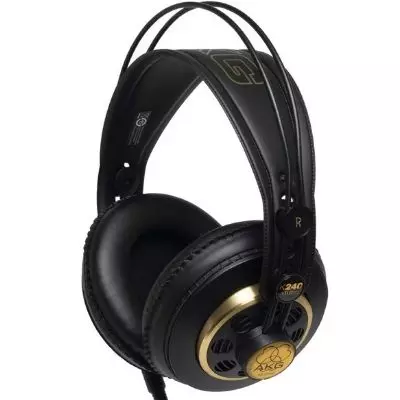
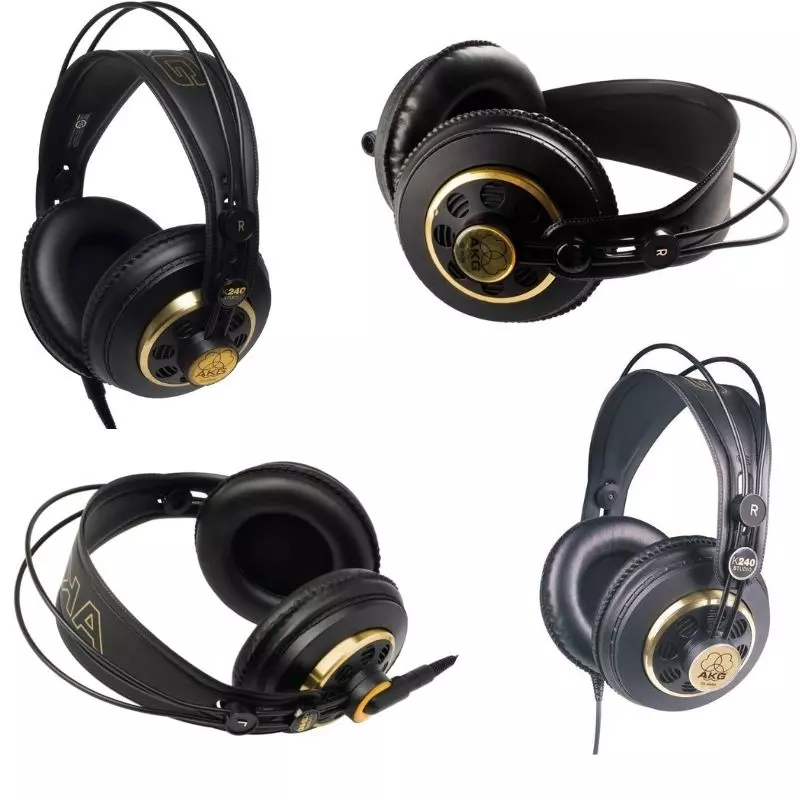
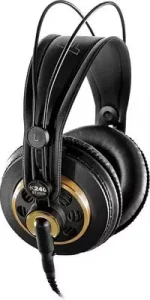
The build is mostly plastic, but the engineering is thoughtful. The self-adjusting suspension headband is the standout feature — put them on and they conform to your head automatically. No slider hunting, no pressure points.
Here's what you get out of the box:
- Semi-open circumaural (over-ear) design with gold mesh grille
- Velour ear pads — breathable and comfortable for multi-hour sessions
- 3-meter coiled cable with locking mini-XLR connector on the headphone end
- Gold-plated 6.3mm (¼-inch) screw-on adapter for amps and audio interfaces
- No carrying case included
| Specification | AKG K240 Studio |
|---|---|
| Type | Semi-open, over-ear |
| Driver Size | 30mm |
| Frequency Response | 15 Hz – 25,000 Hz |
| Impedance | 55 ohms |
| Sensitivity | 91 dB SPL/V |
| Weight | 240g (without cable) |
| Cable | 3m coiled, locking mini-XLR |
| Connections | 3.5mm with 6.3mm adapter included |
How the K240 Actually Sounds
The K240 is tuned for accuracy, not excitement. If you're coming from bass-boosted consumer headphones, the sound will feel restrained at first. Give it a few listening sessions — that restraint is precision.
- Bass: Controlled and punchy when the recording demands it. No artificial boost. Sub-bass rolls off below 30 Hz — it won't rattle your skull.
- Mids: Forward and detailed. Vocals, acoustic guitar, piano, and strings come through with clarity you rarely find at this price.
- Treble: Extended and airy without turning harsh. You can listen for hours without fatigue setting in.
- Soundstage: Wide and natural for a semi-open headphone. The open-back character gives you a speaker-like sense of space that sealed cans simply can't replicate.
The semi-open design bleeds sound in both directions — you'll hear your environment, and people nearby will hear you. That makes the K240 a home and studio headphone, not a commuter or office headphone. In a quiet space, the soundstage and instrument separation are genuinely impressive for the price.
Who the AKG K240 Is Made For (And Who Should Skip It)
Where It Excels
The K240 fits a specific type of listener. You'll get the most from it if:
- You record, mix, or master music at home and need an honest reference sound without monitor speakers
- You listen to acoustic music, jazz, classical, or folk where instrument detail matters more than bass punch
- You want a headphone you can wear for 3–4 hours without ear pain or heat buildup
- You're a budget-conscious audiophile who wants studio-grade tuning without a studio-grade price
- You prefer the open, breathing soundstage of semi-open design over the closed, sealed character of most consumer cans
If classical and acoustic genres make up most of your listening, the K240 belongs on your short list. For a broader look at how it stacks up against purpose-built options, see our guide to the best headphones for classical music listeners.
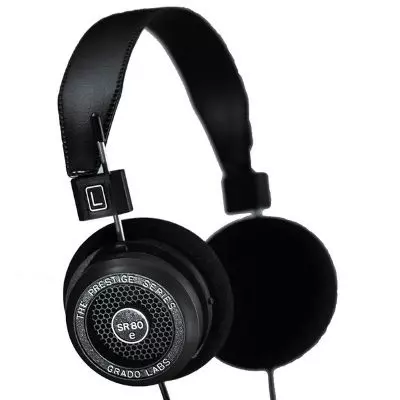
The Grado SR80e (above) is the K240's closest open-back rival. It's an on-ear design with a more energetic, forward sound — more mid-bass presence and a brighter top end. Some listeners prefer Grado's excitement; others find it fatiguing over long sessions. The K240 is warmer and smoother; the Grado is more vivid but less forgiving on poorly mastered recordings.
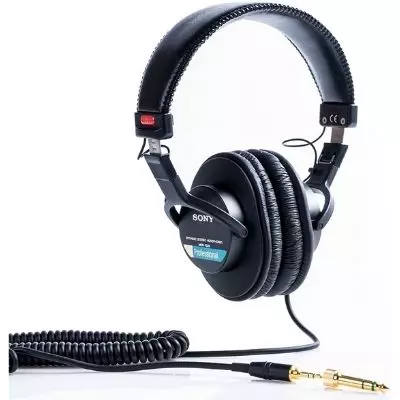
The Sony MDR-7506 is the other classic studio staple at this price. It's fully closed-back, so it offers significantly better passive isolation. The MDR-7506 sounds brighter and more analytical in the high frequencies, while the K240 comes across warmer and more natural. For location recording or tracking where isolation matters, the Sony wins. For home listening and mixing where soundstage depth matters, the AKG wins.
When to Choose Something Else
The K240 is not a universal recommendation. Walk away if:
- You need heavy consumer-style bass — the flat response will feel thin if you're used to bass-boosted tuning
- You need passive noise isolation — the semi-open design leaks sound in both directions
- You'll be using headphones in public or an open office — people around you will hear what you're playing
- You want wireless — the K240 is strictly wired; our wired vs. wireless headphone comparison helps you weigh that tradeoff
- You need a gaming headset with a built-in microphone — the K240 is a pure listening headphone with no mic
If open-back sound with gaming-focused tuning is your priority, our guide to the best open-back headphones for gaming covers options specifically designed for that use case.
Getting the Most Out of Your AKG K240
Choosing the Right Amp and Source
At 55 ohms, the K240 runs from a laptop or smartphone without complaint. But the quality of your source changes what you hear dramatically. Here's how the tiers break down:
- No amp, direct from laptop or phone: Functional for casual use. The sound is slightly flat and dynamic range feels compressed.
- USB DAC/amp combo ($30–$70): The sweet spot for most buyers. Options like the FiiO E10K noticeably improve dynamics, treble clarity, and instrument separation.
- Dedicated headphone amplifier ($100+): Expands the soundstage further and tightens bass control. Worth it if the K240 is your primary listening or reference headphone.
Source file quality matters too. Use lossless audio — FLAC, ALAC, or WAV — rather than heavily compressed MP3s. The K240's accuracy exposes compression artifacts that cheaper headphones mask. A well-mastered FLAC file through a basic DAC/amp sounds markedly better than a 128kbps stream direct from a laptop.
Comfort Upgrades and Cable Swaps
The modular design gives you customization options most headphones at this price don't offer:
- Replace the velour ear pads every 1–2 years of regular use — they compress and collect oils over time. Third-party pads from Brainwavz or Dekoni fit the K240 and can subtly alter the sound signature.
- Swap the 3m coiled cable for a shorter 1–1.5m straight cable — far more practical for desk use. The locking mini-XLR is a standard connector, so aftermarket options are widely available at low cost.
- If the headband feels loose after extended use on a larger head, a foam pad underneath the suspension band restores clamping force without permanent modification.
The locking mini-XLR connector is a genuine long-term asset. Most headphones in this price range are single-unit — cable failure means buying a replacement headphone. A $10–$15 cable swap extends the K240's life indefinitely.
Common AKG K240 Problems and How to Fix Them
Audio and Connectivity Issues
These are the problems users report most often — and most have straightforward solutions:
- One side goes quiet or cuts out: Reseat the locking mini-XLR connector firmly on the headphone. If the issue continues, try a replacement cable before assuming driver failure — the connector is almost always the culprit.
- Sound is thin or lacks body: You're driving it from an underpowered source. Add a USB DAC/amp. This problem disappears in most cases once you add proper amplification.
- Treble feels harsh or fatiguing: Usually a source or recording issue, not the headphone. Try a warmer-voiced DAC/amp, or apply a gentle EQ reduction at 8–12 kHz.
- Channel imbalance (left louder than right or vice versa): Check your audio source for balance settings first. Verify both cable connections are fully seated at both ends.
Fit and Comfort Fixes
The self-adjusting headband handles most fit issues automatically. These edge cases are worth knowing:
- If the headphone feels insecure on a large head, the suspension band has likely stretched with use — add a foam pad under the band or try a replacement headband
- If velour pads feel scratchy or irritating, they're overdue for replacement — new pads resolve this immediately
- If you feel pressure after long sessions in one spot, try angling the ear cups slightly forward or backward to redistribute contact pressure across a different part of your ear
Planning Your Audio Setup Around the AKG K240
Gear Pairings That Work
The K240 makes a reliable foundation for a budget-to-mid-range home audio setup. Here's how to build around it based on your use case:
- For mixing and home recording: K240 + audio interface (Focusrite Scarlett Solo or similar) — the interface acts as your DAC/amp and recording input simultaneously, so you're not duplicating gear
- For pure critical listening: K240 + compact USB DAC/amp (FiiO E10K or AudioQuest DragonFly) — desk-friendly, significant improvement over direct laptop output
- For acoustic and classical genres: K240 + a warmer-voiced amplifier — adds harmonic richness that suits acoustic music well and softens the treble's upper edge
When to Upgrade and What to Consider
The K240 holds its ground in its price tier. Here's when it makes sense to look further:
- When you want a fully open-back design: The semi-open K240 is a middle ground. A true open-back headphone offers a wider, more spacious soundstage. Our AKG K702 review shows exactly what the step up in the same family gets you.
- When your source quality has improved significantly: Once you've added a quality DAC and amp, the K240 may start revealing its driver limitations. That's the signal that a higher-tier headphone will now pay dividends.
- When bass weight becomes a priority: The K240's neutral tuning is permanent — no amount of EQ fully transforms it into a bass-forward headphone. If you need bass impact, a different headphone is the answer rather than chasing it with EQ.
If you're building your first serious headphone setup and want a comprehensive decision framework, our complete headphone buying guide walks through every key variable from driver types to impedance matching.
Frequently Asked Questions
Is the AKG K240 good for gaming?
The K240 works for gaming — the wide soundstage gives you strong positional awareness, and detail retrieval is genuinely good for tracking footsteps and directional cues. The drawbacks are real though: no built-in microphone and a semi-open design that leaks sound both ways. If you're gaming in a shared space or need voice communication, a dedicated gaming headset is the more practical daily driver.
Does the AKG K240 require an amplifier?
Not strictly — at 55 ohms you can drive it from a laptop or smartphone and it works fine. But a basic USB DAC/amp in the $30–$70 range makes a clear, audible difference: better dynamics, cleaner treble extension, and improved separation between instruments. If you're using the K240 as your primary listening or reference headphone, a DAC/amp is the single best upgrade you can make.
How does the AKG K240 compare to the AKG K702?
The K702 is AKG's open-back step-up with a wider soundstage, more precise instrument separation, and a more neutral, airy top end. It requires more amplifier power and costs noticeably more. The K240 delivers roughly 75–80% of the K702's performance at a fraction of the price — it's the smarter entry point if you're new to AKG's studio headphone line and not ready to invest in serious amplification.
Next Steps
- If possible, audition the AKG K240 at a local audio retailer before buying — confirm the neutral sound signature suits your ears, especially if you're coming from bass-boosted consumer headphones.
- Order a basic USB DAC/amp alongside the K240 if your budget allows — the FiiO E10K or similar $40–$60 option is the single most impactful upgrade you can pair with it.
- Convert your most-listened-to albums to FLAC or source them in lossless quality — the K240's accuracy will reveal what you've been missing in compressed formats.
- Plan for ear pad replacement after a year or two of daily use — budget a small amount for third-party velour pads and a shorter aftermarket cable to make your desk setup cleaner.
- When you're ready to step up, bookmark the AKG K702 as your next move in the open-back category — it's the logical progression from the K240 within the same product family.


About Simon B.
Simon here is an audiophile that loves to try out new audio equipment and loves to listen to different genres of music. Being an active student of Audio Electronics, He is more than capable of discussing different elements of headphones. A Powerful Music Can Change The Tone Of Your Heart, That Is The Real Power Of Music.
Get FREE Headset Gifts now. Or latest free Music Guide from our best collections.
Disable Ad block to get all the secrets. Once done, hit any button below