Over 1.1 billion young people worldwide are at risk of permanent hearing loss from unsafe listening, according to the World Health Organization. If you use headphones every day, understanding how to prevent hearing loss from headphones is no longer optional — it's essential. The damage accumulates silently, and by the time you notice symptoms, some of it is already irreversible. This guide gives you the knowledge and practical tools to protect your hearing without sacrificing the listening experience you love.
The good news is that noise-induced hearing loss is almost entirely preventable. Unlike age-related hearing loss, which is largely driven by genetics, the kind caused by loud headphones comes down to habits — habits you can change starting today. Understanding how your ears respond to prolonged sound exposure, and which headphone choices support your hearing health, puts you firmly in control of the outcome.
Headphones are central to daily life. Commuting, gaming, working from home, unwinding with music — you're spending hours with audio piped directly toward your eardrum. That proximity matters. For a broader look at how those hours shape your everyday experience, read How Headphones Affect Your Daily Life — it puts the full picture in context before we get into the specifics.
Contents
- How to Prevent Hearing Loss from Headphones: The Core Rules
- Choosing Headphones That Work With Your Ears, Not Against Them
- Listening Scenarios That Demand Extra Caution
- The Biggest Myths About Headphones and Hearing Loss
- Listening Habits That Silently Damage Your Ears
- What Noise-Induced Hearing Loss Looks Like in Real Life
- Balancing Sound Quality Against Ear Safety
- Frequently Asked Questions
- Next Steps
How to Prevent Hearing Loss from Headphones: The Core Rules
The 60/60 Rule
The most effective and widely endorsed strategy for protecting your hearing is the 60/60 rule: keep your volume at or below 60% of maximum, and limit continuous listening to 60 minutes before taking a break. It sounds almost too simple, but the science behind it is solid. Sound damage is a function of both intensity and duration — lower the intensity, and you can safely extend the duration. Push the intensity up, and even short sessions cause cumulative harm to the delicate structures inside your ear.
Your ears need recovery time just like muscles after exercise. A 5 to 10 minute break every hour lets the hair cells inside your cochlea reset. These hair cells — the sensory receptors that convert sound waves into electrical signals your brain interprets as audio — do not regenerate once destroyed. That biological reality is exactly what makes prevention so much more powerful than treatment.
Understanding Volume Reference Points
Most people genuinely have no idea how loud their headphones are. Normal conversation registers around 60 decibels (dB). A busy city street sits at roughly 80 dB. Sustained exposure above 85 dB begins causing damage. Many consumer headphones can push well past 100 dB at full volume — equivalent to standing next to a chainsaw. The problem is that none of this feels extreme in the moment, especially with quality drivers producing clean, pleasant sound.
Pro tip: If you can't hold a normal conversation with your headphones on at your current volume, it's already too loud — drop it two notches and reassess.
Choosing Headphones That Work With Your Ears, Not Against Them
The Noise-Cancelling Advantage
One of the best equipment decisions you can make for your long-term hearing health is investing in a quality active noise-cancelling (ANC) headphone. The logic is direct: when you can hear your audio clearly without fighting background noise, you naturally listen at lower volumes. ANC does the work of attenuating the environment so you don't compensate with extra decibels. Studies show that people using noise-cancelling headphones set volume levels an average of 10 to 15 dB lower than those using standard headphones in the same environment — that's a significant reduction in daily noise dose.
If you're weighing your options between headphone types, our Wired vs. Wireless Headphones comparison explores practical differences including noise isolation performance across connection types, which is directly relevant to how safe your listening habits can realistically be.
Over-Ear vs. In-Ear: What the Research Says
Over-ear circumaural headphones create a better passive seal than most earbuds, blocking more ambient noise without active electronics. That matters because earbuds sit directly in the ear canal, funneling sound straight toward the eardrum with almost no distance-based attenuation. Over-ear designs create physical space between the driver and your eardrum, which translates to lower effective sound pressure at the same volume setting.
| Headphone Type | Passive Isolation | Driver Distance from Eardrum | Relative Risk at Same Volume | Best Use Case |
|---|---|---|---|---|
| Over-ear closed-back | High | Farthest | Lower | Long sessions, home, studio |
| On-ear supra-aural | Medium | Moderate | Moderate | Commuting, casual use |
| In-ear with silicone tips | Medium–High | Closest | Higher if volume compensated | Exercise, travel |
| Open-back over-ear | Minimal | Farthest | Variable | Quiet home listening |
That said, the real-world risk gap between headphone types is smaller than most people expect. The dominant variable is always the volume you set and how long you listen. A well-fitted noise-isolating earbud at moderate volume is safer than premium over-ear headphones blasted at full power.
Listening Scenarios That Demand Extra Caution
Commuting and Transit
Public transit is one of the most acoustically dangerous environments for regular headphone users. Subway cars, buses, and airplanes generate sustained background noise between 70 and 95 dB. Without noise isolation, your brain automatically pushes you to raise the volume above the ambient floor — often past 90 dB without any conscious decision. In transit environments, noise-cancelling headphones aren't a luxury — they're a hearing protection tool.
Working From Home and Extended Sessions
Remote workers often wear headphones for six, eight, even ten hours daily across calls, focus music, and ambient audio. That cumulative exposure is where serious risk accumulates. A moderate volume of 75 dB sustained over eight hours crosses the daily noise dose threshold established by occupational health guidelines. If you rely heavily on audio while working, it's worth exploring lower-intensity options — what white noise actually does and why it's a smarter background audio choice than music or podcasts at volume.
Extended Gaming Sessions
Gaming headsets introduce a specific risk that standard music listening doesn't: sudden loud transients. Explosions, gunshots, and dramatic sound cues spike well above your session's average level. A session averaging 70 dB might include peaks at 100 dB or higher. Those peaks register as real cochlear damage even when the average sounds reasonable. If you game for extended periods, consider enabling in-game volume limiters or using headset companion software that caps peak output.
The Biggest Myths About Headphones and Hearing Loss
Myth: Only Earbuds Cause Hearing Loss, Not Over-Ear Headphones
Any headphone type causes noise-induced hearing loss if used at high volumes over time. The earbud-versus-over-ear debate relates to delivery efficiency, not to whether damage can occur. Over-ear headphones at full volume in a quiet room produce damaging SPL levels just as readily. Headphone form factor matters far less than the volume you choose and how long you maintain it.
Myth: Young People Are Immune to Hearing Damage
The biology doesn't support this. Cochlear hair cells begin dying from noise exposure at any age. Young people often miss the early signs because initial damage occurs in frequency ranges above normal speech — the loss is real but doesn't yet affect conversation. By the time communication starts to suffer, the damage is already substantial and permanent. Age is not a buffer. Consistent high-volume listening at 18 produces the same cellular damage it would at 40.
Myth: Your Ears Will Warn You When It's Too Loud
Your discomfort threshold and your damage threshold are not the same level. Sound actively harms your cochlea at levels that don't feel painful or even particularly loud. Tinnitus — ringing in the ears after a session — is not a stop signal. It's a notification that damage has already occurred during that session. Repeated episodes mean accumulated permanent harm is building. Waiting to "feel" when to stop is one of the most dangerous strategies you can use.

Warning: Regular post-listening ringing in your ears is not normal — it signals temporary threshold shift, and repeated episodes cause progressive permanent hearing loss.
Listening Habits That Silently Damage Your Ears
Volume Creep in Noisy Environments
Volume creep is one of the most insidious patterns in habitual headphone use. You're in a coffee shop, ambient noise rises, you nudge the volume up a notch. Traffic picks up outside — another notch. By the time you're home, you're listening at levels you'd never deliberately set in a quiet room. Volume creep is a leading driver of gradual hearing loss among daily headphone users precisely because each individual increment feels trivial. Noise-cancelling headphones break this cycle at its source by eliminating the environmental pressure to compensate.
Ignoring Early Warning Signs
Tinnitus, muffled hearing after sessions, difficulty tracking high-frequency sounds, or needing people to repeat themselves — these are the early flags. Most people dismiss them, assuming it'll clear up on its own. Often the temporary symptoms do clear. But the underlying hair cell damage doesn't reverse. If you notice consistent post-listening symptoms, see an audiologist. Early-stage NIHL detected on an audiogram is still in a range where you can halt further progression entirely by adjusting your habits.
Sleeping With Headphones In
Sleeping with earbuds in exposes your ears to hours of audio with zero conscious volume monitoring. Even relatively quiet audio played continuously for seven or eight hours adds up to a substantial daily noise dose. Beyond hearing risk, in-ear headphones worn overnight increase the chance of earwax compaction and physical irritation to the canal walls — two problems that compound hearing clarity issues over time.
What Noise-Induced Hearing Loss Looks Like in Real Life
Early-Stage Effects You Might Already Be Experiencing
Noise-induced hearing loss rarely announces itself dramatically. The first changes typically appear as subtle high-frequency loss — consonants in speech start sounding slightly blurred, "s" and "th" sounds become harder to distinguish. Music can begin sounding slightly dull at normal listening levels. Many people attribute these changes to fatigue, seasonal congestion, or earwax buildup — not to their headphone habits.
A standard audiogram will catch this as a notch at 4,000 Hz, the classic NIHL signature. If your audiologist shows you this pattern, it's direct evidence that cumulative noise damage has begun. Catching it here means most of your hearing range remains intact and further loss is preventable — but only if you act on it.
Long-Term Consequences of Ignoring the Problem
Left unchecked, NIHL spreads outward from that 4,000 Hz notch, gradually eroding more of the speech frequency range. Following conversations in noisy rooms becomes difficult, then effortful in quiet rooms, then anywhere. The psychological toll compounds the physical one: social isolation, fatigue from the effort of constant listening, reduced confidence in group settings. Many people with significant acquired hearing loss describe this secondary impact as harder to manage than the hearing limitation itself.
Balancing Sound Quality Against Ear Safety
Where Sound Quality and Ear Safety Actually Align
Here's something the audio industry underemphasizes: higher-quality headphones make hearing protection easier, not harder. A well-engineered transducer delivers clean, accurate sound with low distortion at moderate volumes. A cheap driver needs to be pushed harder to produce an enjoyable result, which means you're compensating for hardware limitations with volume. When you upgrade your headphones, you typically find yourself listening at lower levels because the detail and clarity come through without cranking the dial. Better gear and better hearing habits reinforce each other.
If you're due for an upgrade and want recommendations matched to your use case and budget, our headphone buying guides cover everything from noise-cancelling commuter picks to audiophile-grade open-backs with hearing-friendly performance as a genuine consideration.
When Personal Preferences Create Real Risk
Bass-heavy audio signatures are a particular risk factor that most listeners don't consider. Many people raise volume specifically to feel low-frequency impact — but high-SPL bass is as damaging as any other frequency. If your headphones have a V-shaped or heavily bass-boosted tuning, be aware that enjoying that signature at what feels like a "comfortable" level may still mean higher sound pressure than you'd use with a flatter response. EQ adjustments that boost bass at lower master volumes are a safer route to the same sonic result.

Frequently Asked Questions
Can headphones permanently damage your hearing?
Yes. Prolonged exposure to sound above 85 dB destroys cochlear hair cells that do not regenerate. This is called noise-induced hearing loss (NIHL), and it is permanent. The damage accumulates over time, so even moderate-volume daily use across years adds up to meaningful loss if you're not taking breaks and monitoring your levels.
What is a safe volume level for headphones?
Audiologists generally recommend keeping headphone volume at or below 85 dB, which corresponds to roughly 60% of maximum volume on most devices. Using your phone's volume limit feature or a dedicated volume-limiting app helps enforce this consistently without requiring you to manually monitor every session.
Are noise-cancelling headphones better for your hearing?
Yes, in practice. Active noise cancellation reduces your need to raise volume to compete with ambient noise, which is the main mechanism by which everyday listening becomes damaging. Users of ANC headphones consistently listen at lower average levels than those using standard headphones in equivalent environments.
How long is too long to wear headphones in one session?
The 60-minute guideline is a reasonable baseline — take a 5 to 10 minute break after each hour of listening. At lower volumes (under 70 dB), longer sessions carry less risk. At higher volumes, even shorter sessions accumulate damage. The combination of volume and duration determines your total daily noise dose.
Do over-ear headphones cause less hearing damage than earbuds?
Over-ear headphones do offer some physical advantages — greater driver distance from the eardrum and typically better passive isolation. But the difference in hearing risk between headphone types is small compared to the difference made by your volume habits. Either type used responsibly is safe; either type misused causes damage.
What are the first signs of hearing loss from headphones?
Early signs include tinnitus (ringing or buzzing) after listening sessions, a muffled or cottony quality to sound immediately after use, difficulty distinguishing consonants in speech, and needing higher TV or media volume than you used to. These symptoms warrant a visit to an audiologist — early detection preserves the most options.
Can you recover from hearing loss caused by headphones?
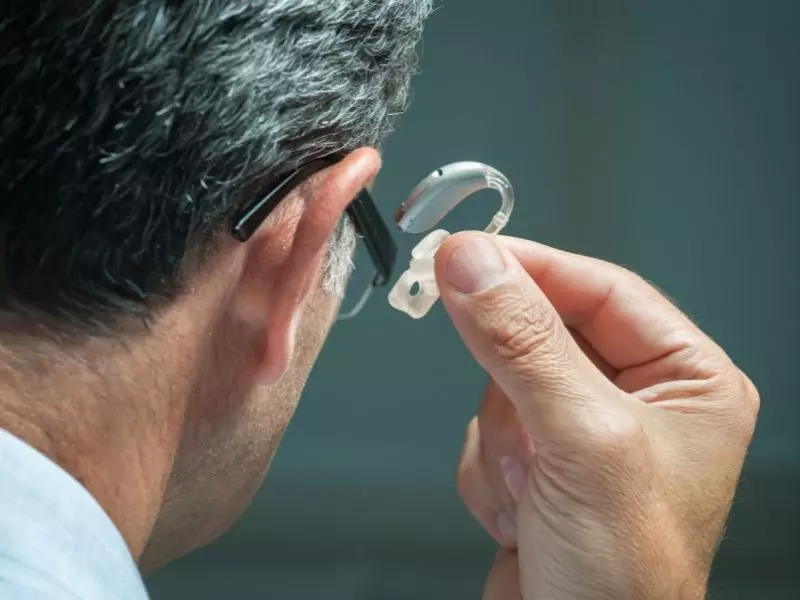
Temporary threshold shift — the muffled sensation after a loud session — does recover within hours as hair cells reset. But repeated exposure creates permanent loss that does not recover. Hearing aids and other assistive devices can help manage existing NIHL, but they do not restore what has been lost. Prevention is the only reliable strategy.
Is it safe to use headphones every day?
Daily use is safe provided you follow volume and duration guidelines. The 60/60 rule (60% volume, 60-minute sessions with breaks) keeps your daily noise dose within safe limits. Daily use at high volumes without breaks, by contrast, creates cumulative damage even if no single session feels particularly extreme.
Next Steps
- Set a volume limit on your device right now. On iOS, go to Settings > Sounds & Haptics > Headphone Safety and enable the limiter. On Android, check your device's sound settings for a similar control. Set it to 75–80 dB and leave it there.
- Book an audiogram if you haven't had one in the past two years. A baseline hearing test costs little and gives you a reference point so future changes are detectable early, when they're still manageable.
- Upgrade to noise-cancelling or noise-isolating headphones if your current pair has no isolation. Browse our buying guides for options at every budget — this single change does more for your hearing health than almost any other habit adjustment.
- Start timing your listening sessions. Use a phone timer or a dedicated app to enforce 60-minute limits with breaks. It feels unnecessary until the habit sets in — then it becomes automatic.
- Stop sleeping with earbuds in. If you use audio to fall asleep, switch to a speaker at low volume set on a sleep timer, or use open-back headphones that don't seal against the canal and pose less physical irritation risk.


About Scarlett Martin
Scarlett Martin is an MSc Degree holder in Digital Audio Engineering. She has worked for well-reputed audio giants. In addition, she has been an audiophile all her life, making her a valuable addition to our staff. Her knowledge of headphones, audio, and other shoulder niches will help us and our audience.
Get FREE Headset Gifts now. Or latest free Music Guide from our best collections.
Disable Ad block to get all the secrets. Once done, hit any button below