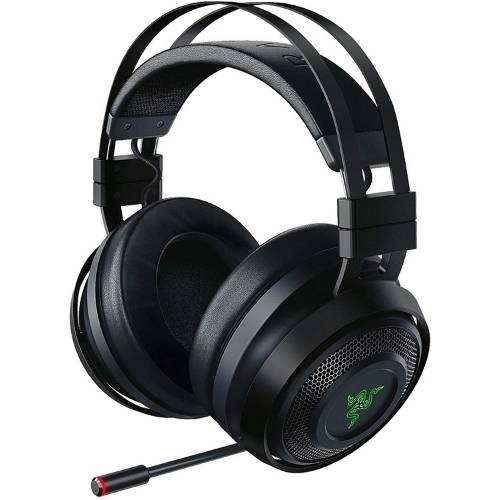
The Razer Nari Wireless brought HyperSense haptic feedback to the gaming headset category — physical vibration synced to in-game audio events. The feature divides opinions, but for immersive single-player titles and racing simulators, it creates a sensory experience no standard headset can replicate. Still worth tracking down if haptics appeal to you.

How to Pick the Best Gaming Headset Under $200
The right headset depends on how you game, not just what looks good on a spec sheet. These four criteria separate the headsets that match your situation from the ones that don't. For broader category comparisons across all headphone types, the headphone buying guides cover the full landscape in depth.
Open-Back vs. Closed-Back Design

Every headset on this list uses a closed-back design, which is the right call for gaming in almost every scenario. Closed-back earcups create physical isolation — ambient noise stays out, your audio stays contained, and no sound leaks to people nearby. Open-back headphones produce a wider, more natural soundstage, but you lose the isolation competitive gaming demands. For most players, in most environments, closed-back is the practical and correct choice.
Wired vs. Wireless

The audio quality gap between wired and wireless has effectively closed in 2026. Modern 2.4GHz proprietary connections — LIGHTSPEED, SLIPSTREAM, and HyperX's fast wireless — deliver latency below 1ms, which is imperceptible during gameplay. Wired headsets retain a raw fidelity edge at the component level, but the difference only surfaces in critical listening or audio production contexts. For gaming, wireless is the right choice for most people. The exception: heavy 2.4GHz interference in your environment — dense apartment buildings, wireless-saturated office spaces — can degrade wireless audio quality, and a wired connection removes that variable entirely. According to Wikipedia's overview of wireless audio technology, modern 2.4GHz implementations have closed the quality gap for virtually all consumer listening applications.
Sound Quality and Driver Technology

Driver size — 40mm, 50mm, or 53mm — affects air displacement, which influences bass extension and maximum volume output. But driver diameter alone doesn't tell the full story. Tuning and diaphragm material matter more than raw size. Razer's TriForce titanium design, HyperX's Dual Chamber system, and SteelSeries' neodymium drivers each approach audio quality through different engineering philosophies. For competitive gaming, you want a frequency response that emphasizes the 1kHz–8kHz range where footsteps, voice communication, and weapon sounds are most defined. For immersive single-player gaming, broader frequency response with deeper bass extension creates a more cinematic experience. Virtual surround — whether 7.1 or Dolby Atmos — adds directional processing that improves enemy positioning accuracy. In first-person shooters especially, directional audio accuracy is the most important spec you're buying.
Microphone Quality, Comfort, and Build


For streaming and content creation, microphone quality is a primary spec. The SteelSeries Arctis Nova 7 Gen 2 and Corsair HS80 lead this list for voice reproduction clarity. For casual squad communication, any headset here performs adequately. Detachable microphone booms add versatility for music listening and everyday use outside gaming sessions.
Comfort is arguably the most important factor for long-session players — and it's the one spec you genuinely cannot read from a datasheet. Memory foam cushions and lightweight frames extend comfortable wear well beyond what budget options manage. If you regularly game for four or more hours at a stretch, build quality and padding density should rank above driver specifications in your decision. An uncomfortable headset with great audio is a worse gaming experience than a comfortable one with average sound. For players on a tighter budget who still want a quality experience, our roundup of gaming headphones under $50 shows what's achievable at the floor of the market.
Frequently Asked Questions
Are gaming headsets under $200 worth buying in 2026?
Absolutely. The sub-$200 category in 2026 delivers features that were exclusive to $300+ headsets just a few years ago — 50+ hour wireless battery life, Dolby Atmos, simultaneous dual-wireless connectivity, and broadcast-quality microphones. You are not making serious compromises at this price point relative to higher tiers.
What is the difference between 7.1 surround sound and Dolby Atmos in a gaming headset?
7.1 virtual surround simulates eight audio channels through digital signal processing applied to two physical drivers. Dolby Atmos is an object-based system that assigns sound to three-dimensional coordinates rather than fixed channels, placing audio anywhere in 3D space with greater precision. Both improve positional accuracy in competitive gaming, but Dolby Atmos generally delivers more realistic spatial cues in titles that support it natively.
Can I use a gaming headset across PC, Xbox, and PlayStation?
Most headsets on this list support multiple platforms, but the method varies. Headsets with a 3.5mm jack work universally without any additional hardware. 2.4GHz wireless headsets require their USB dongle on PC and may not support Xbox natively since Xbox uses its own wireless protocol — unless the headset includes Bluetooth or an official Xbox wireless license. Always verify the platform support list for any wireless headset before purchasing if cross-platform use matters to you.
How long should a gaming headset under $200 last?
A quality headset in the $150–$200 range should last three to five years with regular use. The most common failure points are headband padding compression, hinge wear from daily folding, and mic boom loosening over time. Metal-reinforced headbands and detachable mic booms extend lifespan significantly. Replacing ear cushion foam every 18–24 months is a cost-effective way to restore comfort without replacing the entire unit.
Which headset on this list has the best microphone for streaming?
The SteelSeries Arctis Nova 7 Wireless Gen 2 leads for streaming use. Its ClearCast Gen 2 bidirectional noise-cancelling microphone delivers Discord-certified clarity and natural voice reproduction suited to Twitch and YouTube recording. The Corsair HS80 RGB Wireless is the second-best choice, with a broadcast-grade detachable mic and iCUE sidetone monitoring controls.
Is the HyperX Cloud Alpha Wireless worth buying if it only supports PC?
For PC-primary gamers, yes — without reservation. The 300-hour battery life and Dual Chamber driver audio quality represent exceptional value for the price. The platform limitation only matters if you actively game on Xbox or PlayStation. PC-only players get one of the strongest value-to-performance ratios on this entire list with the Cloud Alpha Wireless.
Buy on Walmart
- HyperX Cloud III – Wired Gaming Headset, PC, PS5, Xbox Serie — Walmart Link
- Razer BlackShark V2 X Gaming Headset: 7.1 Surround Sound - 5 — Walmart Link
- Logitech G435 Lightspeed & Bluetooth Wireless Gaming Headset — Walmart Link
- Corsair HS80 RGB Wireless Multiplatform Gaming Headset - Dol — Walmart Link
- Turtle Beach Stealth 600 Wireless Multiplatform Amplified Ga — Walmart Link
- HyperX Cloud Alpha Wireless - Gaming Headset for PC, 300-hou — Walmart Link
- SteelSeries Arctis Nova 7 Wireless Gen 2 Gaming Headset - Re — Walmart Link
Buy on eBay
- HyperX Cloud III – Wired Gaming Headset, PC, PS5, Xbox Serie — eBay Link
- Razer BlackShark V2 X Gaming Headset: 7.1 Surround Sound - 5 — eBay Link
- Logitech G435 Lightspeed & Bluetooth Wireless Gaming Headset — eBay Link
- Corsair HS80 RGB Wireless Multiplatform Gaming Headset - Dol — eBay Link
- Turtle Beach Stealth 600 Wireless Multiplatform Amplified Ga — eBay Link
- HyperX Cloud Alpha Wireless - Gaming Headset for PC, 300-hou — eBay Link
- SteelSeries Arctis Nova 7 Wireless Gen 2 Gaming Headset - Re — eBay Link
Key Takeaways
- The SteelSeries Arctis Nova 7 Wireless Gen 2 is the best all-around pick for PS5 and PC gamers in 2026 — simultaneous dual-wireless, 200+ game audio presets, 50+ hour battery, and the top-rated microphone on this list in one package.
- The HyperX Cloud III is the definitive wired gaming headset under $200, with angled 53mm drivers, tri-connector platform coverage, and marathon comfort that holds up across the longest sessions.
- The HyperX Cloud Alpha Wireless offers the most remarkable value for PC-only players — 300 hours of battery life and Dual Chamber driver audio at a price that should be higher than it is.
- If battery anxiety is your primary concern, the Turtle Beach Stealth 600's 80-hour wireless runtime eliminates the charger-checking habit that plagues every other wireless headset on this list.


About Simon B.
Simon here is an audiophile that loves to try out new audio equipment and loves to listen to different genres of music. Being an active student of Audio Electronics, He is more than capable of discussing different elements of headphones. A Powerful Music Can Change The Tone Of Your Heart, That Is The Real Power Of Music.
Get FREE Headset Gifts now. Or latest free Music Guide from our best collections.
Disable Ad block to get all the secrets. Once done, hit any button below